
Beauty tools can completely change the way makeup feels and looks on the skin. The right brush can make foundation easier to blend, blush softer and more natural, and concealer more precise. More importantly, a good makeup brush can make a beauty routine feel simple, comfortable, and enjoyable rather than complicated.
The Rare Beauty brush collection has become especially popular among makeup lovers who enjoy soft, controlled application. From the Soft Pinch Blush Brush to foundation and concealer brushes, the brand focuses on shapes designed to help distribute liquid, cream, and powder formulas smoothly. Rare Beauty currently describes several of its brushes as vegan and cruelty-free.
However, buying a popular brush does not automatically guarantee the perfect makeup result. Technique, product texture, skin preparation, brush hygiene, and choosing the correct brush for the job all matter.
Whether you are a beginner building your first makeup kit or an experienced beauty lover refining your technique, understanding how these brushes work can help you get more from your products while keeping your skin comfortable and clean.
Featured Snippet: What Is a Rare Beauty Brush?
A Rare Beauty brush is a makeup application tool designed to help blend and distribute cosmetics such as foundation, blush, concealer, bronzer, and other complexion products. Rare Beauty offers specialized brushes with different shapes and synthetic fibers, allowing users to create sheer, buildable, blended, or more precise makeup looks.
What Makes Rare Beauty Makeup Brushes Different?
Rare Beauty brushes are designed around specific makeup applications rather than treating every brush as a one-size-fits-all tool. This can make a difference when working with highly pigmented liquid blush, lightweight foundation, or targeted concealer.
The brand’s Liquid Touch Foundation Brush, for example, uses densely packed vegan fibers and a distinctive marquis shape. Rare Beauty says the shape is intended to mimic the bounce of fingertips and can be used with liquid, cream, and powder formulas.
The Soft Pinch Blush Brush takes a different approach. It has multi-length synthetic dual fibers and an angled shape designed to help diffuse pigment-rich formulas.
This difference matters because makeup products do not all behave the same way.
A watery liquid blush may need a soft, flexible brush. A full-coverage foundation may benefit from denser bristles. A small concealer brush can provide more control around the nose and eyes.
Main benefits of a specialized brush
- More controlled application.
- Easier blending.
- Better placement of highly pigmented products.
- Buildable coverage.
- Less need to use excessive product.
- More consistent results.
Beginner tip: Do not buy every brush at once. Start with the product you use most often.
Common mistake: Assuming an expensive brush automatically creates a flawless finish. Technique still matters.
Safety tip: Keep brushes clean, particularly when they touch areas affected by acne, irritation, or sensitive skin.
Rare Beauty Soft Pinch Blush Brush for Liquid and Cream Blush
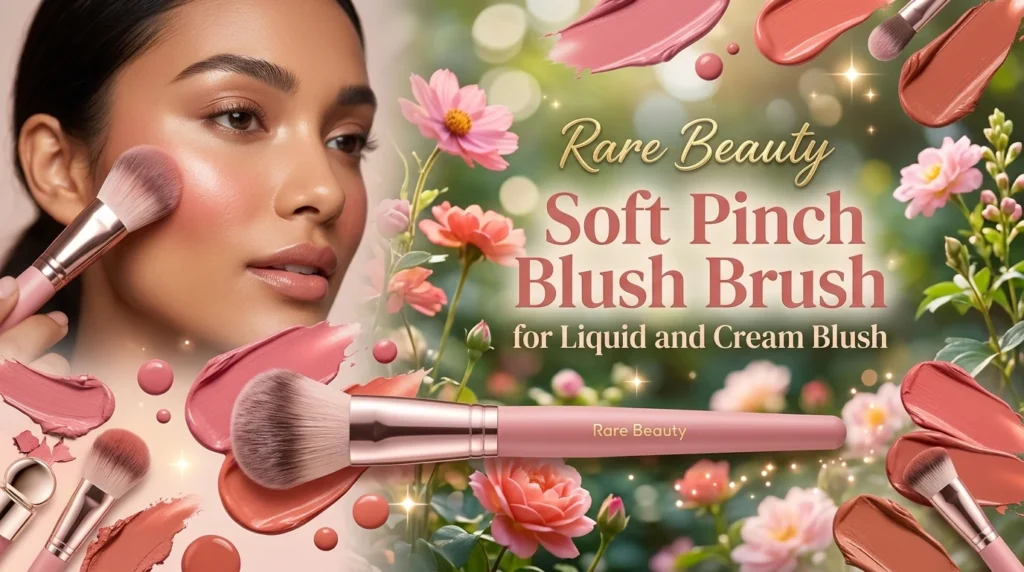
The Soft Pinch Blush Brush is one of the most recognizable tools in the collection. Rare Beauty describes it as a soft, feathery brush intended for pigment-rich formulas, particularly liquids and creams. Its angled shape helps it follow the contours of the cheeks.
This design can be useful because highly pigmented blush often requires careful application. Putting too much product directly onto the cheeks can create a strong patch of color that takes longer to blend.
A better approach is to start small.
Rare Beauty recommends applying one to two dots of Soft Pinch Liquid Blush and then blending with the brush.
How beginners can use it
- Apply a tiny amount of blush.
- Place it higher on the cheek if you want a lifted appearance.
- Use gentle stippling motions.
- Blend outward.
- Add another small amount only if needed.
The brush can also work with cream blush formulas.
Benefit: Its flexible fibers can help soften intense pigment into a diffused finish.
Common mistake: Loading the brush with too much liquid blush.
Best practice: Start with less product than you think you need.
When to avoid it: If your brush is dirty, damp from previous washing, or coated with old makeup, clean it before applying fresh blush.
Rare Beauty Liquid Touch Foundation Brush for Smooth Complexion Makeup
The Liquid Touch Foundation Brush is designed for foundation application, but the official product page says it can also be used with liquid, cream, and powder formulas. Its dense bristles are designed to build, blend, and buff complexion products.
The shape can be particularly useful around areas that need controlled blending, such as the sides of the nose, jawline, and cheeks.
Rare Beauty recommends different motions for different levels of coverage:
- Sweeping for sheer coverage.
- Circular motions for medium coverage.
- Stippling for maximum coverage.
That gives beginners a simple way to experiment without immediately changing products.
For example, if your foundation looks heavy around the cheeks, switch from pressing and stippling to lighter sweeping or buffing motions.
Beginner tip: Apply foundation in thin layers.
Advanced tip: Use targeted stippling only where you want additional coverage rather than applying a thick layer across the entire face.
Frequently overlooked tip: Always blend foundation toward the jaw and hairline so the transition looks natural.
The official product page currently lists this brush at $30, although prices can change.
Rare Beauty Liquid Touch Concealer Brush for Precise Coverage
Concealer requires precision because it is usually applied to smaller areas than foundation. The Liquid Touch Concealer Brush is designed with densely packed bristles and a shape intended for controlled application around the under-eye area and other targeted regions.
Rare Beauty says the brush can be used with liquid, cream, and powder formulas. The pointed tip can help soften edges, while sweeping and stippling motions can be used for blending and building coverage.
A simple under-eye technique
Place a small amount of concealer where coverage is actually needed. Then gently press and blend rather than repeatedly rubbing the delicate area.
If you use too much product, fine lines can become more noticeable as the makeup settles.
Best practice: Use a light hand.
Benefit: A precise brush can help keep coverage localized.
Common mistake: Applying a thick triangle of concealer under the entire eye when only a small amount is needed.
Safety tip: Avoid aggressive rubbing around the eyes. If the area is irritated, swollen, or painful, skip makeup and address the underlying issue.
How to Choose the Best Rare Beauty Brush for Your Makeup Routine
Choosing the best brush depends more on your routine than on popularity.
If blush is your favorite makeup step, the Soft Pinch Blush Brush may be the most useful starting point. If you wear foundation daily, the Liquid Touch Foundation Brush may provide more value.
If you mostly use fingers and only need targeted coverage, a concealer brush may be enough.
Quick selection guide
Your main makeup needBrush type to considerWhyLiquid blushAngled blush brushHelps diffuse concentrated pigmentCream blushSoft cheek brushSupports controlled blendingFoundationDense complexion brushHelps spread and buff productConcealerSmall precision brushGives targeted controlPowder makeupFlexible or dense powder brushHelps distribute powder evenlyTravelCompact brush or cleanerEasier for on-the-go touch-ups
Buying tip: Choose the brush that solves a problem you actually have.
Avoid: Purchasing multiple similar brushes simply because they are trending.
Consider your makeup finish too. A sheer look often benefits from lighter application, while full coverage may require more controlled layering.
Rare Beauty Brushes for Different Skin Types and Makeup Textures
Brush selection can also depend on skin type and the formula being applied.
People with dry skin may prefer lighter pressure because aggressive buffing can emphasize flaky areas. Good skin preparation also matters. Moisturizing before makeup can help create a more comfortable base when appropriate for your skin.
People with oily or combination skin may prefer controlled layering rather than applying a heavy layer of foundation.
Sensitive skin requires additional care.
Important: A brush itself does not determine whether makeup is suitable for sensitive or acne-prone skin. The cosmetic formula, ingredients, hygiene, and individual skin response matter too.
Skin-friendly application habits
- Use gentle pressure.
- Avoid repeatedly rubbing irritated areas.
- Wash brushes regularly.
- Do not share personal makeup tools.
- Remove makeup before sleeping.
- Stop using products that repeatedly cause irritation.
Frequently overlooked tip: Dirty brushes can accumulate makeup residue, oils, and debris. Cleaning them is part of a good makeup routine, not an optional extra.
If acne, eczema, dermatitis, or another skin condition becomes difficult to manage, consult a dermatologist rather than trying to solve the problem with more makeup.
How to Use a Rare Beauty Brush for a Natural, Blended Finish
The best makeup brush technique is usually gentle and controlled.
Start by preparing the skin. Cleanse according to your normal routine, moisturize if needed, and apply sunscreen during the day. Allow skincare products to settle before applying complexion makeup when appropriate.
Then use the brush according to the formula.
For liquid products, pressing, stippling, or short controlled motions can help distribute color. For foundation, use broader motions across larger areas and smaller movements around the nose and eyes.
Try this three-step blending method
Step one: Apply a small amount.
Step two: Blend from the center outward.
Step three: Inspect the makeup in natural light and add only what you need.
Benefit: Controlled layering can create a more natural finish than applying too much product at once.
Common mistake: Pressing too hard.
The bristles should do the work. Excessive pressure can move the makeup around instead of blending it.
Advanced tip: Use different pressure levels. Light pressure diffuses edges, while slightly firmer stippling can build coverage in targeted areas.
Rare Beauty Brush Cleaning and Hygiene Guide
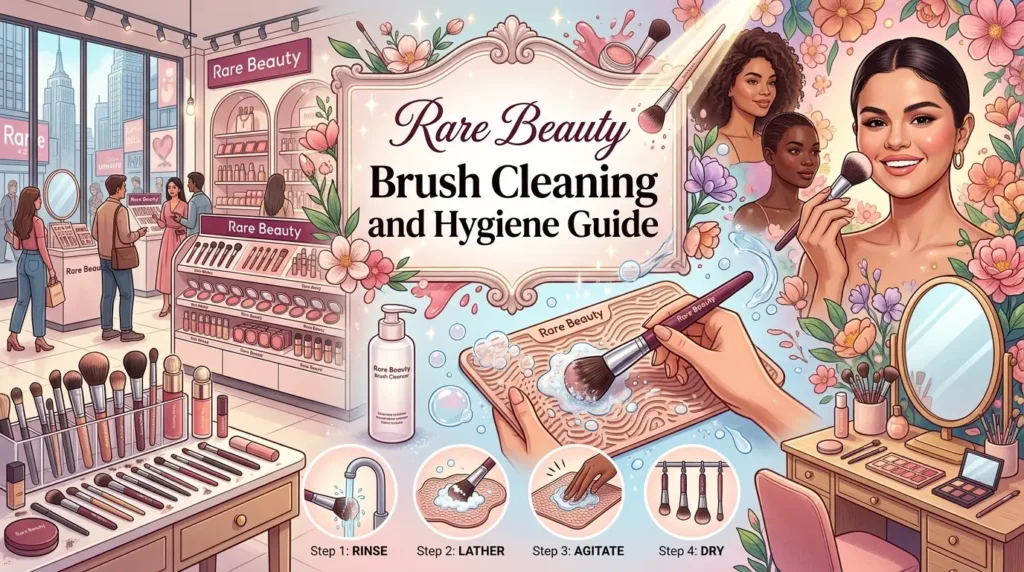
Brush cleaning is one of the most important parts of owning makeup tools.
Rare Beauty recommends cleaning its Liquid Touch Foundation Brush with gentle soap and warm water. The same cleaning guidance appears for its Liquid Touch Concealer Brush.
For powder makeup, Rare Beauty also sells a Dry Brush Cleaner designed to remove powder pigment without soap or water between shades. The brand specifically notes that the cleaner is for powder pigment and does not work with liquids.
Basic wet-cleaning routine
- Wet the bristles with warm water.
- Apply gentle soap.
- Massage the bristles carefully.
- Rinse thoroughly.
- Gently squeeze out excess water.
- Reshape the brush.
- Allow it to dry fully.
Do not soak the entire brush handle unnecessarily.
Common mistake: Storing a wet brush immediately.
Moisture trapped inside a brush can contribute to unpleasant odors and deterioration over time.
Best practice: Let the brush dry completely in a clean, ventilated area.
Common Rare Beauty Brush Mistakes and How to Avoid Them
Even an excellent brush can produce poor results if it is used incorrectly.
One of the biggest mistakes is using too much makeup. A brush cannot fix an excessive amount of product. Start small and build.
Another mistake is using the same dirty brush for several complexion products. This can muddy colors and make blending harder.
Mistakes to watch for
- Using too much liquid blush.
- Applying foundation in a thick layer.
- Skipping skin preparation.
- Using excessive pressure.
- Neglecting brush cleaning.
- Sharing brushes.
- Leaving brushes wet.
- Using a brush for a formula it does not handle well.
- Expecting one tool to perform every task perfectly.
Tip box: If makeup looks patchy, do not immediately add more product. First try blending with a clean brush.
When to avoid makeup: If your skin is actively irritated, painful, infected, or unusually swollen, giving the area a break may be more sensible than covering it.
Persistent skin problems should be evaluated by a healthcare professional.
Rare Beauty Brush vs Makeup Sponge and Traditional Brushes
A brush is not automatically better than a sponge. Each tool creates a slightly different application experience.
ToolStrengthBest useRare Beauty brushControlled applicationFoundation, blush, concealerMakeup spongeSoft, diffused finishBlending complexion productsFingersWarm, direct applicationSome creams and liquidsTraditional flat brushDefined applicationSpecific foundation techniquesLarge fluffy brushBroad diffusionPowder and bronzer
The right choice depends on your preferred finish and product.
A makeup sponge may work well for someone who likes a soft, pressed finish. A brush may appeal to someone who wants more control and does not want to use their hands.
Beginner recommendation: Try one brush with your favorite product before buying a full collection.
Common mistake: Assuming the tool alone creates the finish. Product amount, skin preparation, technique, and formula remain important.
How to Build a Beginner Rare Beauty Makeup Brush Collection
You do not need a large collection to create polished makeup.
A beginner can build a useful kit around the products they actually wear.
Minimal collection
- One blush brush.
- One foundation brush if you use foundation.
- One concealer brush if you prefer brush application.
- One powder brush if you regularly use loose or pressed powder.
The Soft Pinch Blush Brush can be a practical starting point for people who enjoy cream or liquid blush. Rare Beauty states that it is designed for those textures and can also be used with other liquid and cream formulas.
More advanced collection
Add specialized tools only when you understand why you need them.
For example, someone who regularly uses contour, bronzer, highlighter, and multiple eyeshadow shades may benefit from a broader selection.
Buying tip: Quality and usefulness matter more than quantity.
Common mistake: Building a brush collection based on social-media aesthetics instead of personal makeup habits.
Benefit: A smaller kit is easier to clean, organize, and maintain.
Advanced Techniques for Blush, Foundation, Contour, and Concealer
Once you understand basic application, you can use the same brush in several ways.
For blush, stippling can place pigment while swirling can soften edges. Rare Beauty specifically recommends stippling and swirling techniques with its Soft Pinch Blush Brush.
For foundation, sweeping can create lighter coverage, circular motions can build medium coverage, and stippling can increase coverage.
For concealer, use the pointed area of a precision brush to soften edges rather than spreading product over a much larger area.
Advanced blending principle
Think of makeup in layers.
The first layer creates an overall base. The second layer corrects specific areas. The final blending step removes visible edges.
Professional tip: Change pressure rather than constantly adding product.
This technique can help maintain a skin-like appearance.
For contour and bronzer, place product deliberately rather than dragging a dark shade across the face. Rare Beauty also recommends its Soft Pinch Blush Brush for blending its liquid contour.
Safety reminder: Never use a makeup tool to aggressively massage or exfoliate the skin.
Rare Beauty Brush Buying Guide, Value, and Product Selection Tips
Price is one part of value, but usability matters just as much.
At the time of this research, Rare Beauty’s official website lists the Soft Pinch Blush Brush at $26 and the Liquid Touch Foundation Brush at $30. Prices and availability can change, so shoppers should check the official product page before purchasing.
What to evaluate before buying
Brush shape: Does it match the product you want to apply?
Fiber type: Synthetic fibers can be useful for many liquid and cream formulas.
Density: Dense brushes generally provide more controlled product placement, while softer, airier brushes can help diffuse pigment.
Handle: Choose a shape that feels comfortable and stable.
Maintenance: Consider how easy the brush will be to clean.
Versatility: A multi-use brush can provide better value for a smaller makeup collection.
Who may benefit most?
- Beginners wanting more controlled application.
- Makeup lovers who use liquid and cream blush.
- People who prefer brushes over sponges.
- Anyone looking for specialized complexion tools.
- Travelers who want compact, purposeful tools.
Best practice: Buy from an authorized or reputable retailer and check the packaging carefully.
Myths, Facts, and Frequently Overlooked Rare Beauty Brush Tips
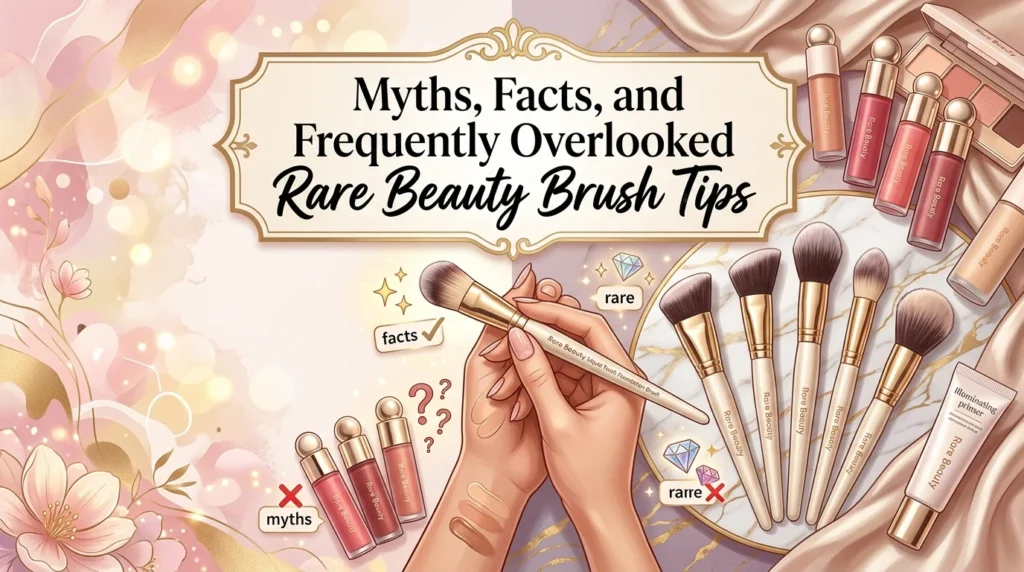
Makeup brushes often attract exaggerated claims. Separating technique from marketing can help you make better choices.
Myth vs fact
MythFactAn expensive brush guarantees perfect makeup.Technique and product amount still matter.One brush can do everything equally well.Specialized shapes can improve control for specific products.You only need to clean brushes when they look dirty.Regular cleaning is an important hygiene habit.More pressure creates better coverage.Excess pressure can move makeup and irritate skin.Liquid makeup always needs a sponge.Brushes can work very well with many liquid formulas.A viral brush works for every person.Personal preferences, skin type, and technique differ.
Rare Beauty’s current brush range illustrates why shape matters. Its blush brush uses a flexible angled design, while its foundation and concealer brushes use different shapes and densities for their intended purposes.
Frequently overlooked tip: The condition of your skin often affects makeup more than the brush itself. Dry flakes, excess oil, irritation, or insufficient hydration can change how foundation and blush sit on the surface.
A good beauty routine therefore starts with healthy skincare habits.
How to Store and Maintain Rare Beauty Makeup Brushes
Proper storage can extend the useful life of makeup brushes and keep them cleaner between applications.
After washing, allow each brush to dry fully before placing it into a closed container. Store brushes away from excessive humidity, direct heat, and dusty surfaces.
A brush holder can keep tools upright and easy to reach. A travel case can provide additional protection when carrying brushes outside the home.
Brush-care checklist
- Clean brushes regularly.
- Allow them to dry completely.
- Keep bristles protected from dust.
- Do not crush the brush head under heavy objects.
- Avoid unnecessary exposure to heat.
- Do not share personal brushes.
- Replace brushes when bristles become severely damaged.
- Check for changes in smell, texture, or shedding.
Rare Beauty’s Dry Brush Cleaner is designed specifically for quick removal of powder pigment between shades and is reusable after washing the sponge pad with warm soap and water.
For liquid and cream residue, however, follow a proper wet-cleaning routine rather than relying on a dry pigment cleaner.
A well-maintained brush is more pleasant to use, easier to control, and less likely to interfere with your makeup application.
Conclusion
A great makeup brush should make beauty feel easier, not more complicated. The Rare Beauty brush collection offers specialized shapes for blush, foundation, concealer, and other makeup applications, giving beginners and experienced users different ways to control coverage and blending.
The Soft Pinch Blush Brush is particularly useful for diffusing concentrated liquid and cream blush, while the Liquid Touch Foundation Brush focuses on controlled complexion application. The Liquid Touch Concealer Brush provides a more precise option for smaller areas.
Still, the best brush is the one that fits your routine. You do not need every tool in a collection to create beautiful makeup.
Focus on clean brushes, gentle application, healthy skin preparation, appropriate product amounts, and good hygiene. These habits can make a bigger difference than simply buying more beauty tools.
Makeup should enhance confidence and creativity while allowing real skin to remain real. Choose tools thoughtfully, care for them properly, and let your beauty routine work for you rather than becoming another source of pressure.
FAQs
What is the best Rare Beauty brush for beginners?
The Soft Pinch Blush Brush is a practical choice for beginners who enjoy liquid or cream blush because its angled, flexible design is intended to diffuse concentrated pigment.
Is the Rare Beauty Soft Pinch Blush Brush worth it?
It can be worthwhile if you regularly use liquid or cream blush and want controlled blending. Its current official price is listed as $26, though prices can change.
How do you clean a Rare Beauty brush?
Rare Beauty recommends using gentle soap and warm water for cleaning its Liquid Touch Foundation Brush. After washing, rinse thoroughly, reshape the bristles, and allow the brush to dry completely.
Can a dirty makeup brush cause skin problems?
Poor brush hygiene can allow makeup residue and other debris to build up. Regular cleaning is therefore an important part of good cosmetic hygiene, especially for people prone to breakouts or irritation.
Is a Rare Beauty brush better than a makeup sponge?
Neither is universally better. Brushes can provide controlled application and efficient blending, while sponges can create a softer, pressed finish. Personal preference and product formula should guide the choice.
How do I stop blush from looking too strong with a Rare Beauty brush?
Start with a very small amount of blush and blend before adding more. This is especially useful with highly pigmented liquid formulas such as Soft Pinch Liquid Blush, which Rare Beauty says can deliver strong color from a small amount.
Can I use the Rare Beauty Dry Brush Cleaner on liquid foundation?
No. Rare Beauty specifically states that its Dry Brush Cleaner is intended for powder pigment and does not work with liquids. Use gentle soap and warm water to properly clean liquid or cream residue.