If you want a lightweight base that gives your skin a more even, natural-looking finish, a beauty skin tint can be a useful choice. Unlike full-coverage foundation, a skin tint is designed to provide sheer to light coverage while allowing some of your natural skin texture to remain visible.
Whether you are creating a simple everyday makeup routine or looking for a comfortable alternative to heavier foundation, understanding how to make and use a skin tint can help you choose ingredients and application methods that suit your skin.
What Is a Beauty Skin Tint?
A beauty skin tint is a lightweight complexion product that sits between skincare and traditional makeup. It usually provides less coverage than foundation and is intended to subtly even out the appearance of the complexion rather than completely conceal every mark.
Many modern skin tints contain a combination of water, emollients, pigments, and skin-conditioning ingredients. The exact formula varies depending on whether the product is designed for dry, oily, combination, or sensitive skin.
A good skin tint should feel comfortable and blend easily without creating a thick or heavily made-up appearance. Common reasons people use one include:
- Creating a more even-looking complexion
- Adding a natural-looking hint of coverage
- Reducing the appearance of mild redness
- Building a quick everyday makeup routine
- Achieving a fresh, skin-like finish
How to Make Beauty Skin Tint at Home
If you want to make a simple beauty skin tint yourself, it is important to distinguish between a cosmetic mixture made for immediate personal use and a properly preserved cosmetic product intended for storage.
A homemade mixture can be created by combining a suitable liquid or cream base with cosmetic-grade pigment. However, adding ingredients such as water or fresh botanical materials can introduce microorganisms. Without proper preservation and testing, a homemade product may not remain safe for long.
For a basic personal-use experiment, you can focus on cosmetic ingredients specifically intended for skin application. Avoid using craft pigments, food coloring, or unknown powders because they may not be suitable for facial skin.
A simple concept may include:
- A lightweight cosmetic base
- Cosmetic-grade iron oxide pigments
- A suitable emollient
- A small amount of skin-compatible moisturizer
- Properly sanitized mixing equipment
For anything stored beyond immediate use, professional cosmetic formulation and preservation are much safer approaches.
Ingredients Commonly Found in Skin Tint Formulas
The ingredients in a skin tint determine its texture, coverage, finish, and feel. Water-based formulas often feel fresh and lightweight, while oil-based or silicone-rich formulas can provide more slip and a smoother finish.
Pigments are responsible for adding color. Iron oxides are commonly used in complexion cosmetics because they provide shades ranging from yellow and red to brown and black. The balance of pigments helps create different skin tones.
Other ingredients can serve specific formulation purposes:
- Humectants help attract and retain moisture.
- Emollients help soften the skin and improve spreadability.
- Silicones can create a smooth, silky texture.
- Thickeners help control consistency.
- Preservatives help protect water-containing formulas from microbial growth.
- Film-forming ingredients can improve how the product wears.
The important point is that every ingredient has a purpose. Simply mixing several skincare products and pigments does not automatically create a stable cosmetic formula.
Choosing the Right Skin Tint for Your Skin Type
Skin type can influence how a tint looks and feels throughout the day. Someone with dry skin may prefer a more hydrating formula, while someone with oily skin may find a lightweight, less emollient formula more comfortable.
For combination skin, balancing hydration and oil control can be particularly useful. The cheeks may benefit from a comfortable, flexible finish, while the T-zone may require a lighter application.
Consider these general characteristics:
- Dry skin: Look for hydrating and emollient ingredients.
- Oily skin: Lightweight, breathable formulas may work better.
- Combination skin: Apply different amounts to different areas.
- Normal skin: Most lightweight formulas can work comfortably.
- Sensitive skin: Keep the ingredient list simple and avoid known irritants.
Your skin can also change with weather, hormones, age, and skincare routines, so a product that works well at one time may feel different later.
How to Choose a Natural-Looking Shade
Shade selection is one of the most important parts of using a skin tint. Because tints usually offer sheer coverage, the shade can sometimes be more forgiving than a full-coverage foundation. However, choosing a noticeably incorrect undertone can still make the complexion look unnatural.
Skin undertones are generally described as warm, cool, or neutral. Warm undertones often have golden or yellow characteristics, cool undertones can appear pink or rosy, and neutral undertones fall somewhere between the two.
When testing a complexion product, consider:
- Your natural skin depth
- Your undertone
- How the shade looks along the jawline
- Whether it changes appearance after application
- How it looks in natural daylight
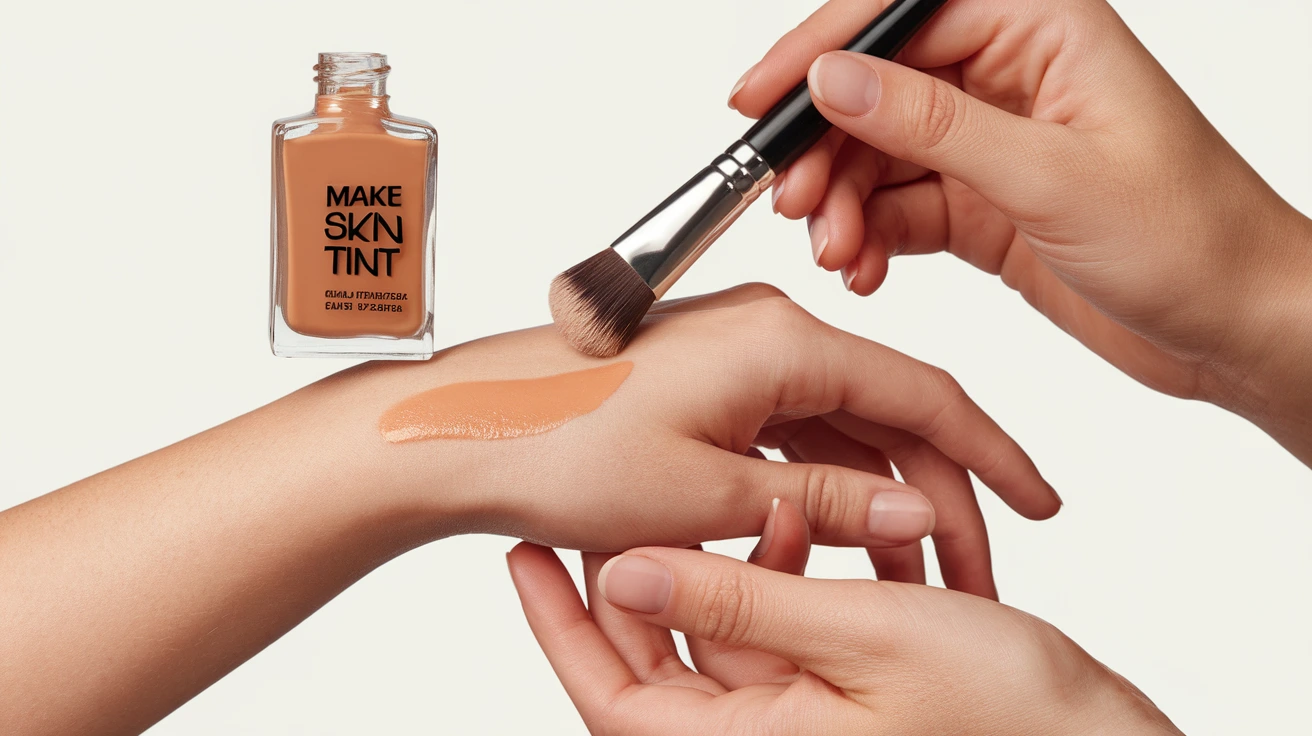
Testing along the jaw rather than only on the hand can give a more useful indication of how the shade will blend with your face and neck.
Skin Tint vs. Foundation
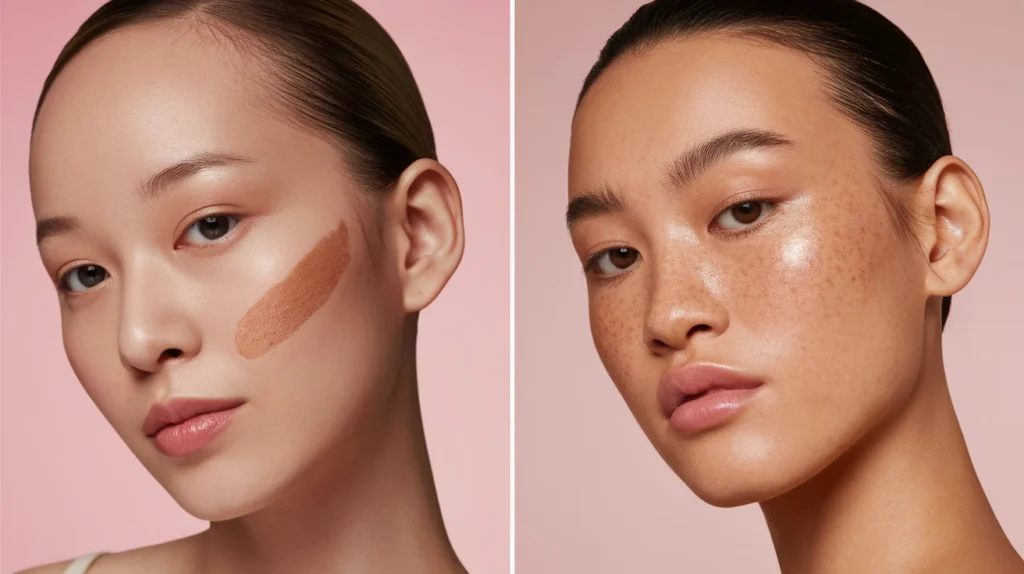
Skin tint and foundation are both complexion products, but they are designed for different levels of coverage. Foundation generally offers more coverage and can be available in finishes ranging from matte to dewy.
A skin tint typically prioritizes a lightweight feel and natural appearance. It may allow freckles, small blemishes, and natural skin texture to remain visible.
Choose a skin tint when you want:
- Sheer or light coverage
- A lightweight makeup feel
- A natural complexion
- Quick application
- Less emphasis on complete coverage
Foundation may be more appropriate when you need stronger coverage for discoloration, acne marks, or a more polished makeup look.
How to Apply Beauty Skin Tint
Skin tint can usually be applied with clean fingers, a makeup sponge, or a suitable complexion brush. The best method depends on the formula and the finish you want.
Start with a small amount and spread it from the center of the face outward. Applying too much product at once can make a lightweight formula look uneven instead of natural.
For a simple application:
- Start with clean, moisturized skin.
- Allow skincare products to settle.
- Apply a small amount of skin tint.
- Blend outward toward the hairline and jaw.
- Add another thin layer only where additional coverage is needed.
- Check the final finish in natural light.
If the product contains sun protection, remember that the amount needed to achieve the labeled SPF may be greater than the amount you would normally apply as makeup. A separate broad-spectrum sunscreen may therefore still be important.
How to Make Skin Tint Look Better Throughout the Day
Even a good skin tint can separate, fade, or become shiny depending on skin type, climate, skincare products, and application technique.
Preparation makes a noticeable difference. Clean skin followed by appropriate moisturizer can create a more even surface. However, applying too many rich skincare products immediately before makeup may cause some formulas to move or separate.
For longer wear, consider these practical tips:
- Use skincare that suits your skin type.
- Give moisturizer time to absorb.
- Apply thin layers instead of one heavy layer.
- Set only areas that become excessively shiny if needed.
- Avoid repeatedly touching your face.
- Use a gentle touch when refreshing makeup.
In hot or humid weather, lighter layers may feel more comfortable. In colder or drier conditions, additional hydration may help prevent a tint from emphasizing dry patches.
Safety Tips for Homemade Skin Tint
Making cosmetics at home requires more care than simply mixing ingredients together. Water-containing products can support microbial growth, and contamination can occur through hands, containers, brushes, or raw materials.
Do not use homemade facial products if they develop an unusual smell, color, texture, or visible growth. Likewise, avoid sharing homemade cosmetics because sharing can increase the risk of contamination.
It is also wise to perform a small skin test before using a new cosmetic broadly. Stop using a product if you experience significant irritation, burning, swelling, or another unexpected reaction.
For safer formulation:
- Use cosmetic-grade ingredients from reputable suppliers.
- Keep equipment and containers clean.
- Avoid adding fresh food or kitchen ingredients.
- Do not rely on smell alone to determine product safety.
- Follow supplier instructions for each ingredient.
- Use proper preservation for products intended for storage.
If you are developing a skin tint for sale, professional formulation, stability testing, preservation testing, and appropriate cosmetic regulations become especially important.
How to Store a Skin Tint Properly
Storage can affect both the quality and safety of cosmetic products. Heat, moisture, sunlight, and repeated contamination can accelerate changes in a formula.
Keep complexion products closed when not in use and avoid leaving them in hot places such as a car or direct sunlight. Use clean hands or applicators when applying the product.
A product’s appearance and performance can provide useful warning signs. Separation, unusual odor, significant color changes, or a dramatic texture change may indicate that the product should no longer be used.
For homemade formulas, shelf life is particularly difficult to predict without proper preservation and stability testing. Therefore, creating only a small amount for immediate experimentation is safer than making a large batch and storing it for an extended period.
Common Mistakes When Using Skin Tint
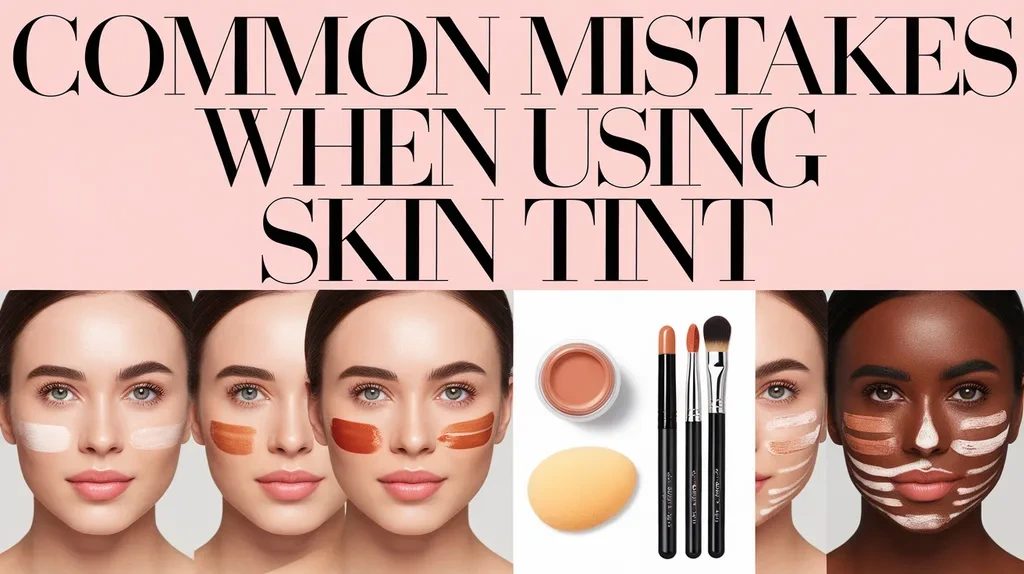
One common mistake is expecting a skin tint to behave like full-coverage foundation. Because the product is intentionally lightweight, it is designed to let some natural skin characteristics remain visible.
Another mistake is applying too much product. A skin tint usually works best in thin layers. Excess product can collect around dry areas, pores, or facial lines.
Other mistakes include:
- Choosing a shade based only on the hand
- Applying makeup over skincare that has not settled
- Using too much product in one area
- Ignoring the neck when checking the shade
- Storing homemade formulas for too long
- Using non-cosmetic pigments or unsuitable ingredients
Understanding the purpose of a skin tint makes it easier to use it effectively. The goal is generally to enhance the complexion rather than completely transform its appearance.
Benefits of Using a Lightweight Skin Tint
A skin tint can simplify an everyday makeup routine because it combines a small amount of complexion coverage with a lightweight cosmetic finish.
For people who do not want the feel of traditional foundation, a tint can provide a middle ground between bare skin and more substantial makeup. It can also be layered selectively, allowing you to use more product only where it is needed.
Potential benefits include:
- Lightweight and comfortable wear
- Sheer, natural-looking coverage
- Easy blending
- Quick application
- Flexible everyday use
- A skin-like finish
However, benefits depend on the individual formula. Ingredients, skin type, climate, and application technique all influence the final result.
Frequently Asked Questions
Is skin tint better than foundation?
Neither is universally better. Skin tint is generally better suited to sheer, lightweight coverage, while foundation is more useful when you want medium to full coverage.
Can I make a skin tint with moisturizer and foundation?
Mixing moisturizer with foundation can temporarily create a lighter-coverage mixture, but it is not necessarily a stable cosmetic formulation. For regular use, a properly formulated skin tint is a safer choice.
Can skin tint replace sunscreen?
No. A skin tint containing SPF should be applied at the amount needed to achieve its labeled protection. Makeup is generally not a reliable substitute for a dedicated sunscreen routine.
How do I choose a skin tint shade?
Match the product to your complexion depth and undertone, and check the shade along your jawline in natural daylight. A close undertone match can make sheer coverage look more natural.
Is skin tint suitable for everyday use?
A properly formulated skin tint can be suitable for everyday makeup use when it agrees with your skin. Choose products appropriate for your skin type and stop using them if they cause persistent irritation.
Conclusion
A beauty skin tint is a practical option for achieving light, natural-looking complexion coverage without the heavier feel of traditional foundation. The right formula, shade, preparation, and application technique can make a significant difference in the final result.
If you want to make a skin tint yourself, prioritize cosmetic-grade ingredients, cleanliness, appropriate preservation, and skin safety. For everyday use, a professionally formulated product can provide greater confidence about stability and preservation. Ultimately, keeping your routine simple and choosing products that suit your skin is the best approach to healthy, comfortable makeup use.