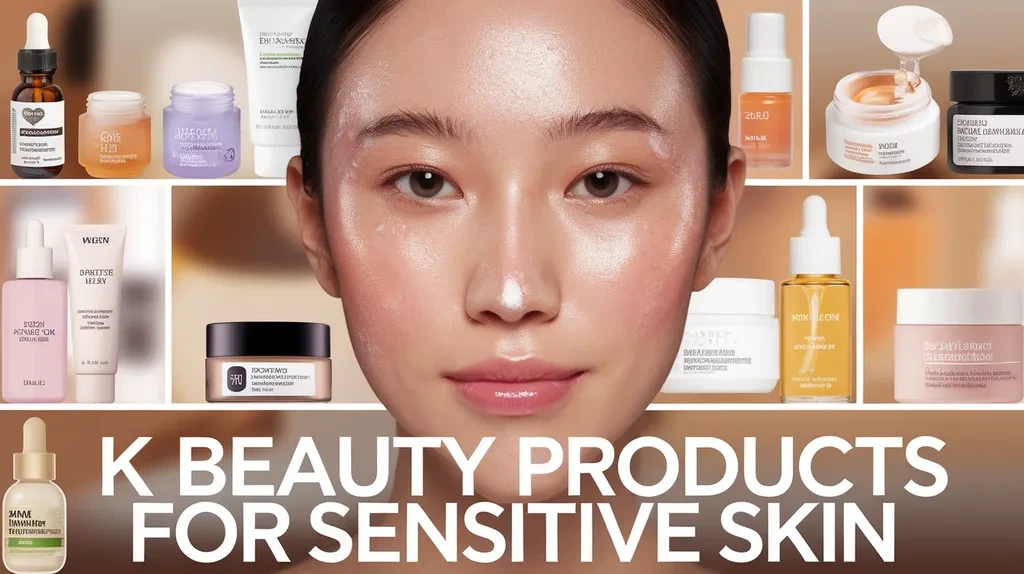
K-beauty has become widely known for gentle skincare routines, lightweight textures, and products designed around hydration and skin comfort. However, people with sensitive skin need to be selective because even products marketed as gentle can contain ingredients that cause irritation.
The best k beauty products for sensitive skin focus on supporting the skin barrier rather than overwhelming the skin with too many active ingredients. A simple routine built around gentle cleansing, hydration, and daily sun protection can be a practical starting point.
Why K-Beauty Can Work Well for Sensitive Skin
K-beauty skincare often emphasizes hydration, barrier support, and gradual product layering. Instead of relying on one strong treatment, many Korean skincare routines use several lightweight products to address moisture and comfort.
This approach can be useful for sensitive skin when each product has a clear purpose. However, “K-beauty” does not automatically mean a product is suitable for everyone. Formulas can contain fragrances, exfoliating acids, essential oils, or other ingredients that some sensitive skin types may not tolerate.
Look for products that prioritize:
- Gentle cleansing
- Skin-barrier support
- Simple hydration
- Minimal unnecessary irritants
- Appropriate daily sun protection
Understanding Sensitive Skin
Sensitive skin is often more reactive to environmental conditions, skincare products, temperature changes, or friction. People may experience temporary redness, stinging, dryness, tightness, or discomfort after using certain products.
Because sensitivity varies from person to person, there is no single ingredient list that works for everyone. A product that feels comfortable for one person may cause irritation for another.
When building a Korean skincare routine for sensitive skin, pay attention to how your skin responds rather than following every popular skincare trend.
Ingredients to Look For
Certain skincare ingredients are commonly used to support hydration and the skin barrier. Humectants such as glycerin and hyaluronic acid can help attract water, while ingredients such as ceramides can support the skin barrier.
Centella asiatica, often called cica, is another ingredient frequently found in Korean skincare designed around skin comfort. Panthenol is also commonly used in moisturizing formulas.
Useful ingredient categories include:
- Ceramides: Help support the skin barrier.
- Glycerin: Provides moisture through humectant action.
- Panthenol: Commonly used in soothing and moisturizing formulas.
- Hyaluronic acid: Helps attract and retain water in the skin.
- Centella asiatica: Often included in products designed for sensitive or stressed skin.
No ingredient should be considered universally safe for every individual. Patch testing and gradual introduction remain important.
Ingredients Sensitive Skin May Need to Avoid
Sensitive skin does not necessarily require avoiding every fragrance, alcohol, or active ingredient. However, some people find certain ingredients irritating, particularly when their skin barrier is already compromised.
Strong exfoliating acids, high concentrations of retinoids, intense fragrances, and essential oils may be more challenging for reactive skin. Using several potentially irritating products at the same time can make it difficult to identify what caused a reaction.
If your skin is easily irritated, consider introducing one new product at a time. This makes your routine easier to monitor.
It can also help to:
- Avoid adding several active ingredients simultaneously.
- Stop using a product that consistently causes burning or irritation.
- Choose fragrance-free options when fragrance is a known trigger.
- Avoid aggressive physical scrubbing.
- Give your skin time to adjust to new products.
Gentle Korean Cleansers for Sensitive Skin
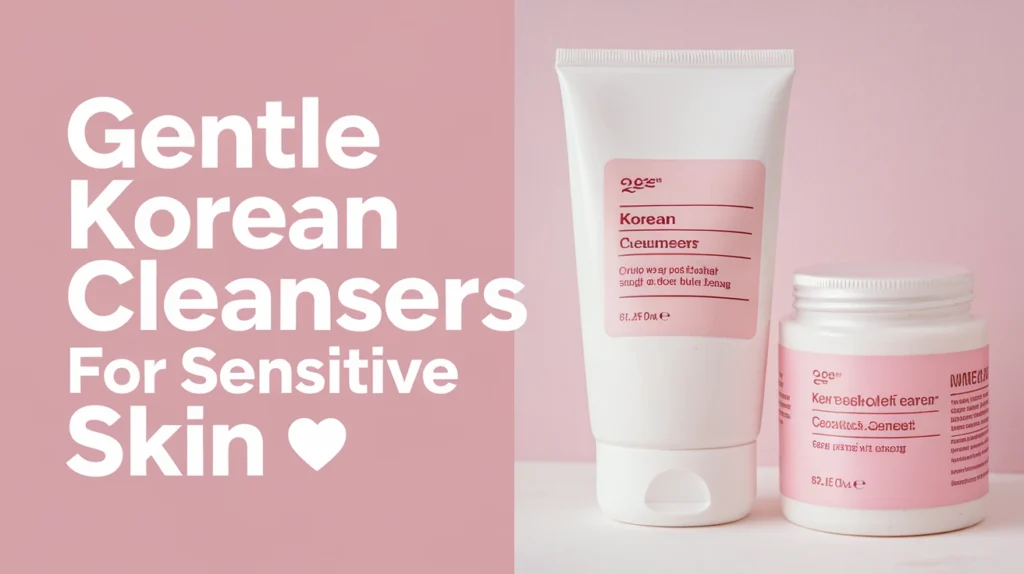
Cleansing is an important first step, but over-cleansing can leave sensitive skin feeling dry and uncomfortable. A gentle cleanser should remove dirt, sunscreen, and excess oil without leaving the skin feeling excessively tight.
K-beauty offers many low-irritation cleansing formulas, including gentle gel, cream, and low-foam cleansers. The right choice depends on your skin type and how much makeup or sunscreen you normally wear.
If you use heavy or water-resistant sunscreen or makeup, double cleansing may sometimes be useful. However, sensitive skin does not automatically require double cleansing every day. A simple cleanser may be enough when there is little product buildup.
Hydrating Toners and Essences
Toners and essences are common parts of Korean skincare routines. Modern hydrating formulas can provide additional moisture without the harsh astringent feeling associated with some traditional toners.
For sensitive skin, choose products that focus on hydration instead of aggressive exfoliation. A lightweight essence can also help reduce the feeling of dryness and prepare the skin for subsequent moisturizing steps.
You do not need several layers of toner or essence to achieve healthy-looking skin. One well-tolerated hydrating product may be more useful than a complicated routine containing multiple overlapping formulas.
Look for simple products containing ingredients such as:
- Glycerin
- Panthenol
- Hyaluronic acid
- Beta-glucan
- Centella asiatica
Moisturizers for a Stronger Skin Barrier
A moisturizer is one of the most important steps for sensitive skin because it helps reduce moisture loss and supports the skin’s protective barrier. Korean moisturizers come in many textures, ranging from lightweight gels to richer creams.
People with oily or combination skin may prefer a lighter lotion or gel-cream, while dry sensitive skin may feel more comfortable with a richer cream.
A good moisturizer should feel comfortable rather than sting or leave excessive dryness. If your skin repeatedly feels tight after cleansing, improving moisturization may be more useful than adding multiple treatment products.
Barrier-supporting moisturizers may contain:
- Ceramides
- Fatty acids
- Cholesterol
- Panthenol
- Glycerin
- Squalane
Korean Sunscreen for Sensitive Skin
Daily sunscreen is an important part of any skincare routine, including routines designed for sensitive skin. Sun exposure can contribute to premature skin aging and can worsen visible redness or pigmentation in some individuals.
Korean sunscreens are popular because many formulas offer lightweight textures and comfortable finishes. However, sunscreen suitability is highly individual, particularly for people whose skin reacts to specific filters, fragrances, or other ingredients.
When choosing a sunscreen, consider:
- Broad-spectrum protection
- SPF 30 or higher
- Comfortable application
- Whether the formula irritates your skin
- Water resistance when needed
Apply enough sunscreen to provide the protection stated on the label, and reapply when appropriate based on sun exposure and product directions.
How to Build a Simple K-Beauty Routine
A sensitive-skin routine does not need to contain ten steps. In fact, using fewer products can make it easier to identify which products work and which ones cause irritation.
A basic routine can include a gentle cleanser, moisturizer, and sunscreen. A hydrating toner or essence can be added if your skin tolerates it and you find it useful.
A simple morning routine could look like:
- Gentle cleanser or water rinse, depending on your skin
- Hydrating toner or essence, if needed
- Moisturizer
- Broad-spectrum sunscreen
At night, cleanse the skin, apply a simple hydrating product if desired, and finish with moisturizer. Treatment products can be introduced later when your basic routine is comfortable.
How to Patch Test New Products

Patch testing is a practical way to reduce the risk of applying a new product across your entire face immediately. It cannot guarantee that a product will never cause a reaction, but it can provide useful information about tolerance.
Apply a small amount of the product to a limited area and observe your skin according to the product’s instructions. If significant irritation occurs, discontinue use rather than continuing in an attempt to make your skin “adjust.”
When testing K-beauty skincare, avoid introducing several new products at once. If your skin reacts, using multiple new products makes it difficult to identify the cause.
Common K-Beauty Mistakes for Sensitive Skin
The popularity of Korean skincare can sometimes encourage people to copy elaborate routines without considering their individual skin needs. More products do not necessarily produce better results.
One common mistake is using several exfoliating or active products together. Another is changing products too frequently because of social media trends or new product launches.
Sensitive skin generally benefits from consistency and simplicity. Instead of constantly adding steps, focus on keeping the skin clean, moisturized, and protected from the sun.
Try to avoid:
- Excessive exfoliation
- Frequent product switching
- Very hot water
- Harsh scrubbing
- Over-layering active ingredients
- Ignoring persistent irritation
K-Beauty Products for Different Sensitive Skin Needs
Sensitive skin can also be dry, oily, combination, acne-prone, or dehydrated. Therefore, choosing products requires looking beyond the word “sensitive.”
For dry sensitive skin, prioritize moisturizing cleansers and barrier-supporting creams. For oily sensitive skin, lightweight hydrating products may provide moisture without feeling heavy.
If your skin is acne-prone and sensitive, avoid assuming that strong acne treatments are automatically better. Start with a gentle routine and introduce acne-focused ingredients carefully.
For redness-prone skin, reducing potential irritants and maintaining a consistent moisturizing routine may be more helpful than repeatedly trying strong treatments.
How to Read K-Beauty Product Labels
Understanding labels can make shopping for sensitive-skin products much easier. Ingredients are generally listed in descending order of concentration, although labeling regulations and ingredient presentation can vary by market.
Do not rely solely on claims such as “natural,” “clean,” or “gentle.” These terms do not guarantee that a product will suit your skin.
Instead, consider the complete formula and your personal history with skincare ingredients. If you already know that a particular ingredient causes irritation, checking the ingredient list before purchasing can help you avoid unnecessary problems.
It is also useful to distinguish between cosmetic irritation and an allergic reaction. If you experience significant swelling, hives, difficulty breathing, or another severe reaction, seek appropriate medical attention.
When to Simplify Your Skincare Routine
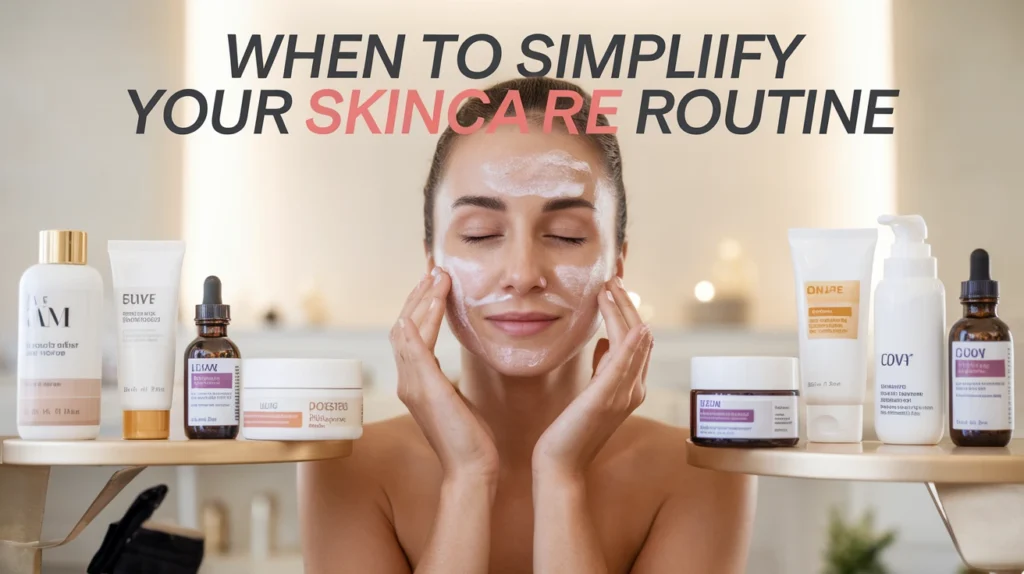
Sometimes the best response to irritated skin is to temporarily simplify your routine. Continuing to add products can make irritation worse and can make it difficult to determine what your skin needs.
A simplified routine can focus on gentle cleansing, basic moisturization, and sun protection during the day. Once your skin feels comfortable again, products can be reintroduced gradually if appropriate.
If irritation continues, becomes severe, or repeatedly returns, consider speaking with a dermatologist. Persistent skin symptoms may have causes that cosmetic products alone cannot address.
Modern Relevance of Korean Skincare for Sensitive Skin
K-beauty has influenced global skincare by making hydration, barrier care, lightweight textures, and ingredient-focused routines more mainstream. These ideas can be particularly relevant to people who prefer gentle, uncomplicated skincare.
At the same time, Korean skincare should not be treated as a universal solution. The most effective routine is the one that suits your skin’s needs, fits your lifestyle, and can be followed consistently.
Rather than chasing every new trend, focus on evidence-informed basics: gentle cleansing, adequate moisturization, appropriate treatment, and regular sun protection.
Conclusion
The best k beauty products for sensitive skin are not necessarily the products with the longest ingredient lists or the most elaborate routines. Sensitive skin often benefits from a simple approach centered on hydration, barrier support, and protection from environmental stress.
Choose products carefully, introduce them one at a time, and pay attention to how your skin responds. Ingredients such as ceramides, glycerin, panthenol, and centella asiatica may be useful components of a gentle routine, but individual tolerance always matters.
Most importantly, avoid excessive exfoliation and unnecessary product layering. A consistent, uncomplicated K-beauty routine can help you care for sensitive skin while reducing the risk of avoidable irritation.
FAQs
What are the best K-beauty products for sensitive skin?
Look for gentle cleansers, hydrating products, barrier-supporting moisturizers, and broad-spectrum sunscreens. Products with simple formulas may be easier for sensitive skin to tolerate.
Is Korean skincare good for sensitive skin?
Korean skincare can be suitable for sensitive skin because many products focus on hydration and barrier care. However, not every K-beauty product is appropriate for every sensitive skin type.
Which ingredients are good for sensitive skin?
Ceramides, glycerin, panthenol, hyaluronic acid, beta-glucan, and centella asiatica are commonly used in products designed to support hydration and skin comfort.
Should sensitive skin avoid exfoliating acids?
Not necessarily, but sensitive skin may be more likely to become irritated by strong or frequent exfoliation. If using an exfoliating acid, introduce it cautiously and avoid combining multiple strong actives.
How many K-beauty products should sensitive skin use?
There is no required number of products. A simple routine with a gentle cleanser, moisturizer, and sunscreen can provide a strong foundation, with additional products added only when needed and tolerated.