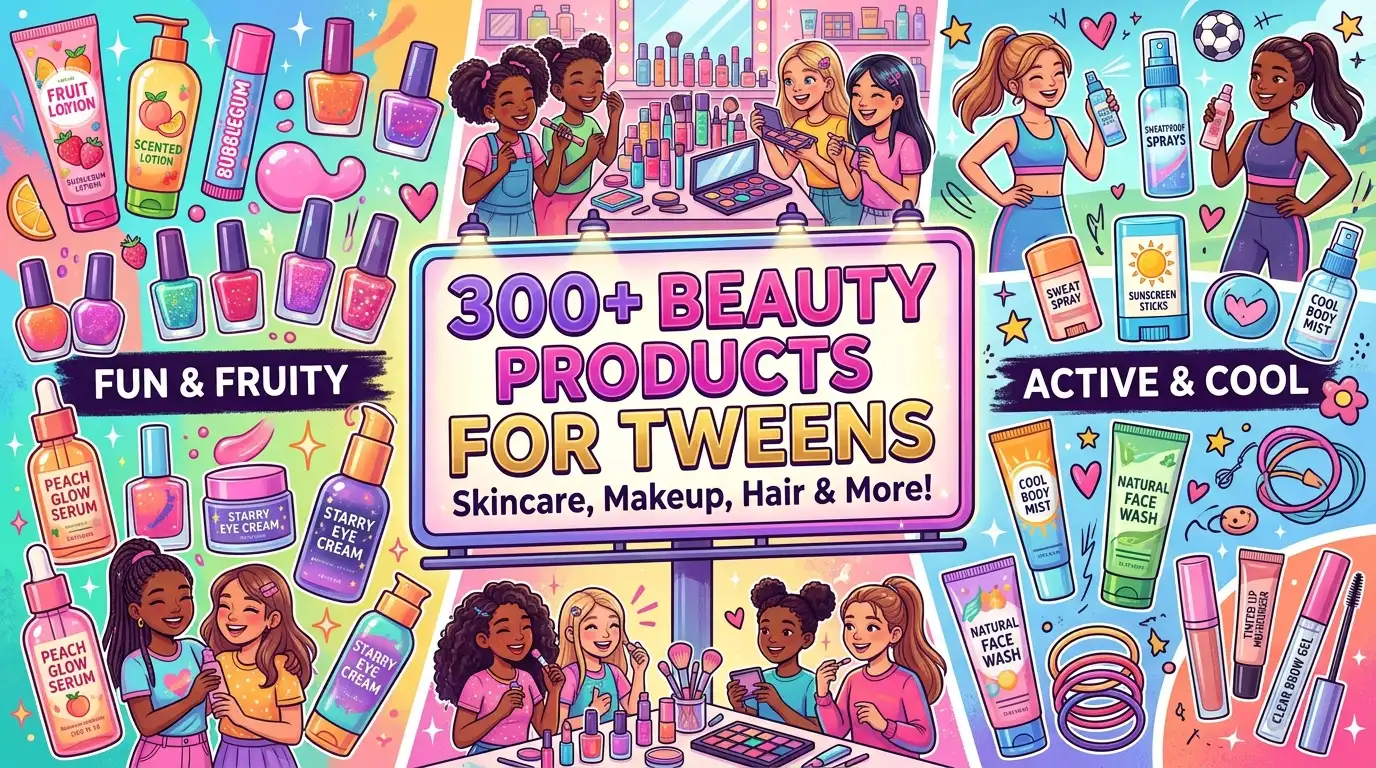
Growing up brings many exciting changes, and learning about skincare and beauty can become a fun part of that journey. For tweens, however, beauty should never be about looking perfect. It should be about clean skin, healthy habits, confidence, self-expression, and age-appropriate self-care.
The best beauty products for tweens are usually simple, gentle, and easy to understand. A young person does not need a complicated 10-step routine or powerful anti-aging formulas. A mild cleanser, moisturizer, sunscreen, lip care, and a few optional beauty products can provide a practical starting point.
Parents and caregivers also play an important role. They can help tweens understand ingredients, read labels, recognize skin changes, and choose products that support the skin barrier rather than overwhelm it.
What Are Beauty Products for Tweens and Why Do They Matter?
Beauty products for tweens are age-appropriate skincare, personal-care, and optional cosmetic products designed for children roughly in the preteen years. The focus should be gentle skincare, hygiene, sun protection, and healthy self-expression, rather than dramatic cosmetic changes.
Tween skin can change quickly as puberty approaches. Oil production may increase, pores may become more noticeable, and occasional blemishes can appear. At the same time, some tweens still have relatively sensitive or childlike skin.
A simple routine can teach useful habits without creating unnecessary complexity.
A good tween beauty routine may include:
- Gentle facial cleanser for removing sweat and dirt.
- Lightweight moisturizer to support the skin barrier.
- Broad-spectrum sunscreen for daily sun protection.
- Lip balm for dry or chapped lips.
- Gentle body wash and basic personal-care products.
- Optional makeup for play, special occasions, or self-expression.
Beginner tip: Start with the smallest routine possible. Add one product at a time so it is easier to identify irritation.
Common mistake: Buying products simply because they are popular on social media. Viral products are not automatically suitable for younger skin.
Safety tip: Stop using a product if it causes significant burning, swelling, persistent redness, or a rash. Serious or ongoing skin problems should be discussed with a parent, caregiver, pediatrician, or dermatologist.
Best Skincare Products for Tweens With Sensitive or Normal Skin
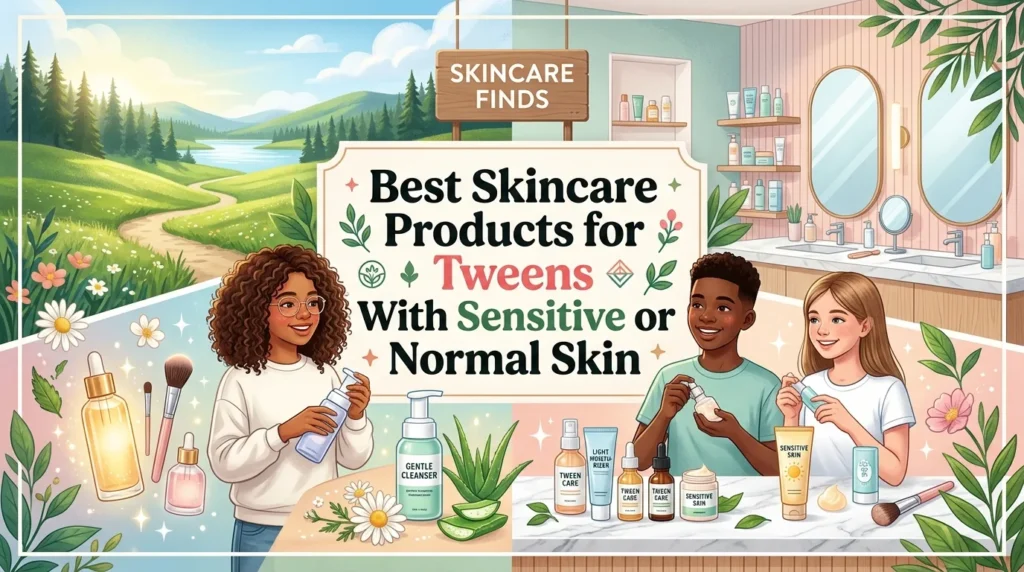
When choosing skincare for tweens, gentle formulas are usually the best starting point. Normal skin may tolerate a basic routine well, while sensitive skin often benefits from fewer ingredients and less fragrance.
Look for products described as gentle, fragrance-free, non-comedogenic, and suitable for sensitive skin when appropriate. These terms can help narrow choices, although no label guarantees that a product will work for every child.
For cleansing, avoid harsh scrubbing. The goal is to remove sweat, dirt, and excess oil without leaving the skin feeling tight.
For moisturizing, choose a comfortable formula that does not feel heavy or irritating.
Helpful selection checklist:
- Choose a mild cleanser.
- Select a simple moisturizer.
- Use broad-spectrum SPF 30 or higher when recommended and practical.
- Avoid unnecessary active ingredients.
- Introduce new products gradually.
- Read the full ingredient list when possible.
Frequently overlooked tip: A product can be gentle for one person and irritating for another. Patch testing a new skincare product on a small area can be a sensible precaution, especially for sensitive skin.
When to avoid a product: Skip it if the skin is already irritated or if the product causes persistent discomfort.
Gentle Ingredients to Look for in Tween Skincare
Ingredient knowledge can make shopping much easier. Tweens do not need a long list of powerful actives, but several gentle ingredients can support basic skincare.
Glycerin is a humectant that helps attract water to the outer layers of skin. It commonly appears in moisturizers and cleansers.
Ceramides are lipids naturally found in the skin barrier. Moisturizers containing ceramides can help support the skin’s protective barrier.
Hyaluronic acid can help moisturize the skin by attracting water. Despite its technical name, it is commonly used in simple hydrating products.
Colloidal oatmeal is often used in products intended for dry or sensitive skin.
Petrolatum is an effective occlusive ingredient that helps reduce water loss from the skin. It can be useful for very dry areas such as lips.
Ingredients that deserve more caution include:
- Strong exfoliating acids.
- High-strength retinoids.
- Aggressive acne treatments without appropriate guidance.
- Strongly fragranced formulas.
- Harsh physical scrubs.
- Products marketed as anti-aging treatments.
Key fact: More active ingredients do not necessarily mean better skincare.
For tweens, the priority should usually be cleansing, moisturizing, sun protection, and gentle habits.
Simple Tween Skincare Routine for Morning and Night
A practical routine is easier to maintain than an elaborate one. For many tweens, a basic morning and evening routine is enough.
Morning routine
- Gently cleanse if needed.
- Apply moisturizer if the skin feels dry.
- Apply broad-spectrum sunscreen according to the product directions.
- Use lip balm as needed.
Some tweens with dry or sensitive skin may not need a strong cleanser first thing in the morning. A gentle rinse may be enough, depending on their skin and routine.
Night routine
- Remove makeup or sunscreen gently.
- Cleanse the face.
- Apply moisturizer.
- Use a simple lip balm if needed.
Best practice: Keep the routine consistent rather than constantly changing products.
Beginner example
A tween who plays soccer after school might wash the face after practice, moisturize if needed, and apply sunscreen before outdoor activities. There is no need for multiple serums or complicated treatments.
Common mistake: Washing the face repeatedly throughout the day. Excessive cleansing can leave skin dry and uncomfortable.
Beauty Products for Tweens With Acne, Oily Skin, or Puberty Changes
Puberty can change how the skin behaves. Increased oil production and occasional acne are common during adolescence, but every tween develops differently.
The first step should be gentle cleansing and avoiding habits that make breakouts worse. Picking, squeezing, or aggressively scrubbing spots can irritate the skin.
For mild concerns, a parent or caregiver can discuss appropriate over-the-counter options with a pharmacist, pediatrician, or dermatologist.
Do not automatically copy an adult acne routine. Products designed for adult skin can contain strong ingredients that are unnecessary or irritating for younger users.
Helpful habits include:
- Wash gently after heavy sweating.
- Keep hands away from the face.
- Avoid picking blemishes.
- Change pillowcases regularly.
- Choose non-comedogenic products when possible.
- Remove makeup before bed.
- Give new products time before replacing them.
When to seek professional advice: Painful acne, widespread inflammation, scarring, persistent rashes, or skin concerns that affect confidence deserve professional attention.
Important warning: Do not use prescription-strength acne medicines or strong exfoliating treatments without appropriate medical guidance.
Tween Makeup and Age-Appropriate Beauty Products
Makeup can be a fun form of creativity. It can also help tweens explore colors, artistic styles, and personal preferences. The key is keeping makeup optional and age appropriate.
For beginners, simple products are often enough:
- Tinted or clear lip balm.
- Gentle lip gloss.
- Washable blush for special occasions.
- Light eye makeup for supervised events, when appropriate.
- Cosmetic brushes that are cleaned regularly.
The purpose should be self-expression rather than hiding perceived flaws.
Parents can establish simple rules about sharing makeup, cleaning brushes, removing cosmetics before sleep, and avoiding products that cause irritation.
Best practice: Introduce one cosmetic product at a time.
Safety tip: Never share eye makeup, mascara, or products that touch the eyes. Eye-area products require extra hygiene.
Common mistake: Sleeping in makeup. Even when a cosmetic feels lightweight, it should be removed before bedtime.
Natural, Clean, Vegan, and Organic Beauty Products for Tweens
Terms such as natural, clean, vegan, and organic can sound appealing, but they should not be treated as automatic proof that a product is safer.
A naturally derived ingredient can still irritate sensitive skin. Likewise, a synthetic ingredient is not automatically harmful.
Instead of relying only on marketing language, examine the product’s purpose, ingredient list, packaging, and suitability for the child’s skin.
A smarter buying approach:
Label or claimWhat to considerNaturalNatural does not automatically mean irritation-free.VeganRefers mainly to animal-derived ingredients, not overall suitability.OrganicCertification and standards vary by product and region.Fragrance-freeMay be helpful for sensitive skin, but still check ingredients.Non-comedogenicDesigned to be less likely to clog pores, but results vary.Dermatologist-testedAsk what the claim actually means; it does not guarantee universal suitability.
Key fact: Focus on the formula and the child’s needs rather than attractive marketing claims.
Sunscreen and Sun Protection for Tweens
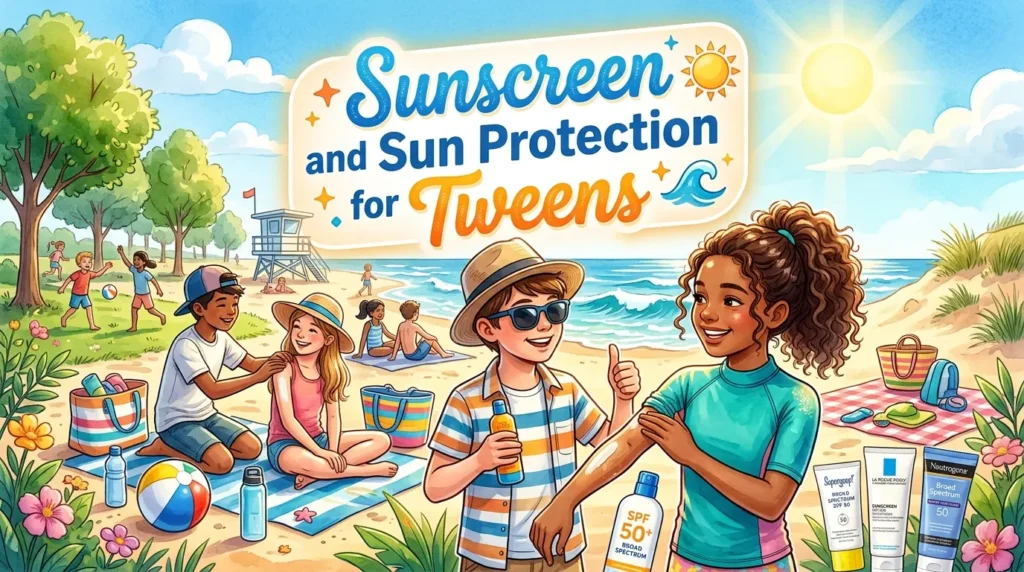
Sun protection is one of the most valuable beauty habits a tween can learn. Regular protection helps reduce sun exposure and supports long-term skin health.
Look for a broad-spectrum sunscreen with SPF 30 or higher when appropriate. Follow the product instructions for application and reapplication, especially during outdoor activities.
Physical protection matters too.
Sun-smart habits include:
- Wearing a hat during strong sun.
- Seeking shade when practical.
- Wearing protective clothing.
- Applying sunscreen to exposed skin.
- Reapplying according to label directions.
- Remembering ears, neck, hands, and other exposed areas.
Frequently overlooked tip: Sunscreen is not only for beach days. Outdoor sports, walking, playground time, and school activities can also involve significant sun exposure.
Common mistake: Applying sunscreen only to the face while leaving other exposed areas unprotected.
If a tween has an unusual mole, persistent skin change, or concerning reaction, a healthcare professional should evaluate it.
Beauty and Personal-Care Products for Tween Boys and Girls
Beauty routines do not need to be divided into strict boy and girl categories. Healthy skincare is about individual needs.
A tween who sweats heavily during sports may need a different cleansing routine from someone with dry skin. Someone with curly hair may need different haircare products from someone with straight hair.
Basic personal care can include:
- Gentle face wash.
- Body wash.
- Moisturizer.
- Lip balm.
- Sunscreen.
- Deodorant when appropriate.
- Shampoo and conditioner suited to hair needs.
- Simple hair styling products.
Best practice: Choose products based on skin, hair, activity level, and comfort rather than gendered packaging.
For example, a tween who plays basketball may benefit more from practical sweat-management habits than from a collection of cosmetic products.
How to Choose Safe Beauty Products for Tweens: A Parent-Friendly Buying Guide
Shopping can become overwhelming because beauty shelves are full of colorful packaging and social-media trends. A simple selection process makes decisions easier.
Start by asking: What does the tween actually need?
If the answer is dry skin, look for a moisturizer. If the concern is sun exposure, prioritize sunscreen. If they want makeup for a special event, choose a small cosmetic collection.
Before buying, check:
- Is the product appropriate for the child’s age and intended use?
- Does it solve a genuine need?
- Is the ingredient list easy to understand?
- Is there unnecessary fragrance?
- Is the packaging intact?
- Is the expiration or period-after-opening information available?
- Does the child have known sensitivities?
- Is the product from a reputable manufacturer?
Buying tip: Avoid purchasing a complete skincare set simply because it contains many products. A smaller routine can be more effective and easier to manage.
Advanced tip: Keep a record of new skincare products if the child has sensitive skin. If irritation develops, it becomes easier to identify what changed.
Common Tween Skincare Mistakes, Myths, and Safety Warnings
Good skincare is partly about knowing what not to do. Social media can create unrealistic expectations and encourage complicated routines.
Myth vs. fact
MythFactTweens need anti-aging skincare.Most do not need an anti-aging routine.More products mean healthier skin.A simple routine is often enough.Natural products cannot irritate skin.Natural ingredients can still cause irritation.Acne means dirty skin.Acne has multiple contributing factors and is not simply caused by poor hygiene.Scrubbing removes acne faster.Aggressive scrubbing can irritate the skin.Every viral product is tween-friendly.Popularity does not determine age suitability.
Avoid these habits:
- Picking pimples.
- Using multiple exfoliants together.
- Copying influencer routines blindly.
- Sharing makeup.
- Sleeping in cosmetics.
- Using expired products.
- Applying adult anti-aging products without professional advice.
Warning: If a product causes severe burning, swelling, blistering, breathing difficulty, or another serious reaction, discontinue use and seek appropriate medical care.
Minimalist Beauty Routine vs. Trendy Multi-Step Skincare for Tweens
The beauty industry often promotes multi-step routines. For tweens, however, a minimalist approach is usually easier to understand and maintain.
Minimal routineMulti-step trend routineCleanserMultiple cleansersMoisturizerToners, essences, serumsSunscreenMultiple active treatmentsLip careSeveral specialized lip productsSimple makeupNumerous cosmetic layers
A minimalist routine reduces the number of variables touching the skin. That can make it easier to identify which product causes a reaction.
A complicated routine may be appropriate for some older teenagers under professional guidance, but it should not become a requirement for tweens.
Best practice: Build a foundation first. Add optional products only when there is a clear reason.
Beginner rule: If a tween cannot explain what a product does, there is a good chance they do not need it yet.
Seasonal Skincare, Hygiene, and Beauty Tips for Tweens
Skin needs can change with the weather and lifestyle.
Summer
Heat and sweating can make skin feel oilier. Gentle cleansing after sports and regular sun protection become especially important.
Winter
Cold air and indoor heating can contribute to dryness. A richer moisturizer may be more comfortable for some tweens.
Spring
Outdoor activities often increase. Sunscreen, hats, and other protective habits remain important.
Autumn
Changing temperatures may require small adjustments to moisturizing and bathing habits.
Overlooked tip: Hot showers can leave dry skin feeling worse. Warm water and gentle cleansing are generally more comfortable for dry skin.
When to adjust the routine: Change products when the skin’s needs genuinely change, not simply because a seasonal beauty trend appears online.
How to Introduce New Beauty Products Safely to Tweens
Introducing products slowly can reduce confusion and make irritation easier to identify.
Start with one new product. Use it according to its instructions. Observe how the skin responds before introducing another unfamiliar formula.
For a tween with sensitive skin, a small-area test can be useful before applying a new product more broadly, although it cannot guarantee that a reaction will not occur later.
Safe introduction checklist:
- Introduce one new product at a time.
- Read the directions.
- Check the ingredients for known sensitivities.
- Avoid applying several new actives simultaneously.
- Stop if significant irritation develops.
- Keep packaging for reference.
- Ask a healthcare professional about persistent reactions.
Professional tip: If a child repeatedly develops reactions to cosmetics or skincare, professional evaluation can help identify possible triggers and create a more suitable routine.
Storage, Hygiene, and Product Safety for Tween Beauty Collections
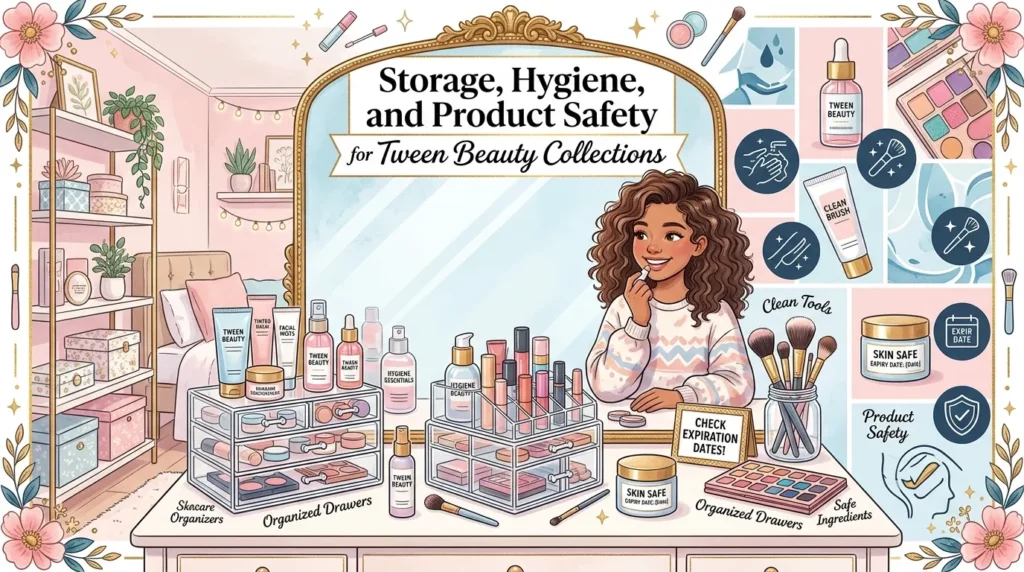
Even gentle products need proper care. Poor hygiene can affect cosmetics and skincare quality.
Keep products closed when not in use. Store them according to the manufacturer’s instructions and avoid leaving temperature-sensitive products in very hot places.
Makeup brushes should be cleaned regularly, particularly when used around the face and eyes.
Product safety habits:
- Do not share mascara.
- Do not share lip products when hygiene is a concern.
- Keep containers closed.
- Avoid touching product unnecessarily.
- Check expiration information.
- Throw away products that change smell, texture, or appearance unexpectedly.
- Keep products away from young children and pets.
- Follow the manufacturer’s storage instructions.
Important: Never use a product simply because it is expensive or fashionable. If its condition has changed, replace it.
Conclusion
The best beauty products for tweens are not the ones that create the longest routine. They are the products that encourage healthy skin, confidence, hygiene, comfort, and positive self-care habits.
For most beginners, a gentle cleanser, suitable moisturizer, lip care, and broad-spectrum sunscreen provide a strong foundation. Optional makeup can then become a creative form of self-expression rather than a daily requirement.
Parents and caregivers can make the experience even better by teaching tweens how to read labels, recognize irritation, avoid unrealistic beauty standards, and understand that healthy skin does not have to look perfect.
Skincare should support confidence, not create pressure. When tweens learn simple, safe habits early, they gain practical knowledge that can benefit their skin and overall wellness for years to come.
FAQs
What are the best beauty products for tweens?
The best options are usually simple and gentle, such as a mild cleanser, moisturizer, broad-spectrum sunscreen, and lip balm. Optional age-appropriate cosmetics can be added for self-expression.
Do tweens need a 10-step skincare routine?
No. Most tweens do not need a complicated routine. Simple cleansing, moisturizing, and sun protection are usually more appropriate starting points.
Can tweens use adult skincare products?
Some basic products may be suitable, but strong adult treatments are not automatically appropriate. Tweens should generally avoid unnecessary anti-aging products and powerful active ingredients unless recommended by a qualified professional.
What ingredients are good for tween skin?
Gentle ingredients such as glycerin, ceramides, hyaluronic acid, colloidal oatmeal, and petrolatum can be useful depending on the product and skin type.
Should tweens use sunscreen every day?
Sun protection is an important healthy habit. A broad-spectrum SPF 30 or higher can be used as directed, along with shade, protective clothing, and hats during outdoor activities.
Is makeup safe for tweens?
Age-appropriate makeup can be used responsibly, particularly for special occasions. Good hygiene matters, and eye cosmetics should never be shared. Makeup should also be removed before sleeping.
Are natural beauty products safer for tweens?
Not necessarily. Natural ingredients can still cause irritation or allergic reactions. Product suitability depends on the individual formula and the child’s skin.
How can tweens prevent acne?
Gentle cleansing, avoiding excessive scrubbing, keeping hands away from the face, removing makeup before bed, and choosing suitable non-comedogenic products can help support healthy skin habits.
When should a tween see a dermatologist?
A dermatologist can help when acne is painful or persistent, skin problems cause scarring, rashes keep returning, or symptoms do not improve with gentle skincare. Professional guidance is especially useful for persistent or severe concerns.
What should tweens avoid in skincare?
Tweens should generally avoid unnecessary harsh scrubs, excessive exfoliation, complicated active-ingredient routines, strong anti-aging treatments, and products that repeatedly cause irritation.
How many skincare products does a tween really need?
There is no fixed number, but a minimal routine is often a good starting point. The goal is to meet actual skincare needs rather than collect products because they are trending online.