Introduction
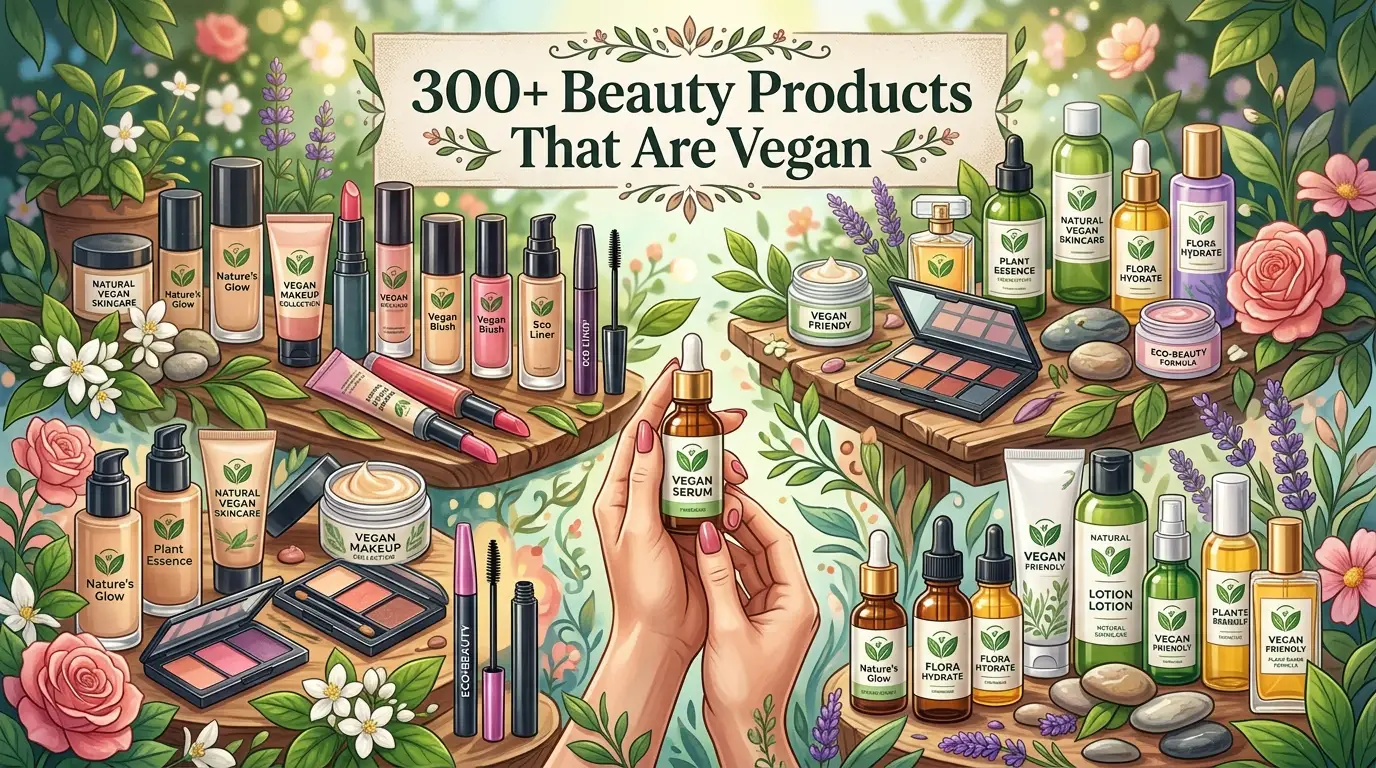
Choosing beauty products that are vegan can be a simple way to make your beauty routine more mindful. For many people, vegan beauty is about more than avoiding certain ingredients. It can also be about choosing formulas that match personal values while still supporting healthy, comfortable, well-cared-for skin.
A good skincare routine should make you feel confident without making your skin feel overwhelmed. Whether you are building your first routine or replacing older products, vegan skincare gives you plenty of options, including cleansers, moisturizers, serums, sunscreens, makeup, hair products, and body care.
However, vegan does not automatically mean better for every skin type. A vegan product can still contain fragrance, essential oils, preservatives, or other ingredients that may irritate sensitive skin. Smart shopping means looking beyond the front label and learning how to understand the complete formula.
The goal is not to buy the most products. It is to find effective, gentle, suitable formulas that work with your skin and fit your lifestyle.
Featured Snippet
Vegan beauty products are cosmetics and personal-care products made without animal-derived ingredients or animal by-products. They may include plant-based, synthetic, or mineral ingredients. Vegan products are not necessarily cruelty-free, organic, natural, or suitable for every skin type, so ingredient labels and certifications still matter.
What Vegan Beauty Products Are and How They Differ
Vegan beauty products are formulated without ingredients derived from animals or animal by-products. This can apply to skincare, makeup, haircare, fragrance, body products, and personal-care items.
Common animal-derived ingredients can include beeswax, lanolin, carmine, collagen from animal sources, keratin from animal sources, and certain forms of glycerin or squalene when their source is animal-derived.
The important detail is that the ingredient name alone may not always reveal its source.
For example, glycerin can come from plant oils, synthetic manufacturing, or animal fats. Squalene can also have different sources. Therefore, checking the manufacturer’s information or a recognized certification can provide more confidence.
For beginners, start with basic products rather than replacing everything at once.
A practical vegan starter routine might include:
- A gentle cleanser.
- A simple moisturizer.
- Broad-spectrum sunscreen.
- One targeted serum if needed.
- A lip product without beeswax.
- Vegan makeup if cosmetics are part of your routine.
Beginner tip: Do not assume that a product with green packaging, leaves, or words such as botanical is vegan. Marketing imagery does not establish ingredient sourcing.
Best practice: Look for a clear vegan claim supported by reliable product information or certification.
Safety note: Vegan status tells you about ingredient sourcing. It does not guarantee that a product will be gentle, non-comedogenic, fragrance-free, or appropriate for eczema, rosacea, or acne.
Why People Choose Vegan Skincare and Cosmetics
People choose vegan beauty for different reasons. Some want to avoid animal-derived ingredients. Others prefer plant-based formulations, ethical sourcing, or brands whose values align with their lifestyle.
Vegan beauty has also become easier to find. Many modern formulas use alternatives such as plant-derived glycerin, plant-based squalane, botanical oils, synthetic peptides, mineral pigments, and laboratory-created ingredients.
One benefit is increased awareness of what goes into personal-care products. Reading labels can encourage more thoughtful shopping instead of buying products simply because they are popular.
However, vegan does not automatically equal environmentally friendly. A vegan formula may still use ingredients that require substantial processing, packaging, transportation, or energy.
Likewise, vegan does not automatically mean organic.
Benefits people may appreciate
- Avoiding animal-derived ingredients.
- Supporting personal ethical preferences.
- Access to a wide range of modern formulations.
- Encouraging greater ingredient awareness.
- Finding plant-derived alternatives to traditional cosmetic ingredients.
Common mistake
A frequent mistake is treating the word vegan as a complete quality assessment.
Instead, consider several factors:
Vegan + suitable ingredients + appropriate formulation + good packaging + reputable manufacturer = smarter product selection.
When to use: Vegan products can fit into virtually any normal skincare routine when their individual ingredients suit your skin.
When to avoid: Avoid a particular product if you already know that one of its ingredients causes irritation or allergy, regardless of its vegan status.
Vegan Ingredients Commonly Found in Beauty Products
The ingredient list is one of the most useful tools for understanding a beauty formula.
Vegan skincare can contain both naturally derived and laboratory-created ingredients. A common misconception is that every vegan product must be completely natural. That is not true.
Some useful ingredients frequently found in vegan formulas include:
IngredientCommon purposeTypical skin benefitPlant-derived glycerinHumectantHelps attract water to the skinPlant-based squalaneEmollientSupports softness and reduces dry feelingAloe veraSoothing ingredientProvides a refreshing, hydrating feelHyaluronic acidHumectantHelps increase skin hydrationNiacinamideSkin-conditioning ingredientSupports the appearance of an even skin toneVitamin C derivativesAntioxidant skincareHelps support brighter-looking skinShea butterEmollientHelps soften dry skinJojoba oilEmollientHelps condition the skinCeramidesBarrier-supporting ingredientsHelp support the skin barrierPlant oilsEmollientsHelp reduce dryness and roughness
Remember that ingredient sourcing can vary by manufacturer.
Expert-informed tip: Do not reject a synthetic ingredient simply because it is synthetic. Synthetic ingredients can be safe, stable, effective, and highly useful in cosmetic formulations.
For example, a carefully formulated synthetic ingredient may be more predictable than an unstable botanical extract.
Frequently overlooked point
Natural extracts can contain many compounds. If you have very reactive skin, a simpler formula may sometimes be easier to tolerate than a product containing numerous botanical ingredients.
Safety tip: Patch testing can be useful when introducing a new product, especially if you have sensitive skin or a history of reactions.
Vegan Skincare Benefits for Different Skin Types
There is no single vegan routine that works for everyone. Your skin type and concerns should guide your product choices.
Dry skin
Look for glycerin, hyaluronic acid, squalane, shea butter, and ceramides.
A creamy cleanser and richer moisturizer may help reduce the uncomfortable tight feeling that often accompanies dryness.
Oily skin
Choose lightweight, non-greasy textures. Gel cleansers and lightweight moisturizers can feel more comfortable.
Do not over-cleanse. Removing too much surface oil can leave the skin feeling irritated and uncomfortable.
Combination skin
Use lightweight products across the face and adjust texture where needed.
For example, you might use a gel moisturizer on oilier areas and a slightly richer formula on dry areas.
Sensitive skin
Prioritize fragrance-free and simple formulations when possible.
Being vegan does not make a product hypoallergenic. Essential oils and botanical extracts can still cause problems for some people.
Mature skin
Focus on hydration, sun protection, and ingredients that support the appearance of smoother, healthier-looking skin.
Sunscreen remains one of the most important daily skincare products, regardless of whether the formula is vegan.
Acne-prone skin
Look for formulas that feel lightweight and are less likely to clog pores. Individual tolerance matters more than the vegan label.
If persistent or severe acne concerns you, consult a dermatologist rather than repeatedly changing cosmetic products.
How to Build a Vegan Daily Skincare Routine
A beginner does not need ten steps.
A simple routine can provide an excellent foundation.
Morning
- Gentle cleanser or water rinse.
- Hydrating serum if desired.
- Moisturizer.
- Broad-spectrum sunscreen.
Evening
- Cleanser.
- Treatment serum if appropriate.
- Moisturizer.
This approach keeps the routine manageable.
Beginner mistake: Adding several exfoliating acids, retinoid products, vitamin C, masks, and scrubs at the same time.
Your skin needs time to adjust. Introducing one new active product at a time makes it easier to identify irritation.
Practical example
Imagine someone with combination skin who wants to switch to vegan skincare. Instead of purchasing an entire vegan collection, they could begin with a gentle cleanser, lightweight moisturizer, and sunscreen.
After several weeks, they could decide whether a serum is actually necessary.
Advanced tip: Track your products for a few weeks. If irritation appears, knowing exactly what changed can help you identify the likely trigger.
When to avoid: Stop using a product that causes significant burning, swelling, hives, or persistent irritation and seek appropriate medical advice when needed.
Best Vegan Products for Morning Skincare
Morning skincare should protect and prepare the skin.
The most important step is sun protection. Look for a broad-spectrum sunscreen with a texture you are willing to use consistently.
A good morning routine may include:
- Gentle cleanser.
- Hydrating product.
- Antioxidant serum.
- Moisturizer.
- Broad-spectrum sunscreen.
You do not necessarily need every step.
If your moisturizer already provides enough hydration, you may not need a separate hydrating serum.
If your skin becomes oily under several layers, simplify the routine.
Ingredient selection
For hydration, consider glycerin and hyaluronic acid.
For barrier support, consider ceramides and squalane.
For antioxidant-focused routines, consider suitable vitamin C derivatives or other antioxidant ingredients.
Real-life example
If you spend most of your day indoors, you might prefer a lightweight sunscreen that layers comfortably under makeup. If you work outdoors, water resistance and consistent reapplication may become more important.
Best practice: Choose sunscreen based on your daily exposure and use it consistently rather than selecting it simply because the packaging looks attractive.
Vegan Night Skincare and Barrier Support
Nighttime is a good opportunity to keep skincare simple and focus on cleansing, hydration, and targeted treatment.
A basic vegan night routine might look like this:
Cleanse → Treat → Moisturize.
If you wear makeup, remove it thoroughly without excessive rubbing.
A gentle cleanser can help remove makeup residue, sunscreen, sweat, and daily buildup.
For dry or sensitive skin, avoid harsh cleansing routines that leave your face feeling stripped.
For targeted concerns, products containing niacinamide, retinoids, azelaic acid, or exfoliating acids may be considered depending on your individual needs. These ingredients are not automatically vegan or non-vegan, so check the specific product.
Important: Some active ingredients can irritate skin when used too frequently.
Beginner strategy
Start with one treatment.
Use it according to the manufacturer’s directions and give your skin time to respond.
Advanced strategy
Experienced skincare users can create routines around different concerns, but more products do not necessarily create better results.
Frequently overlooked tip: Your moisturizer does not have to feel luxurious to be useful. Consistency matters more than an impressive ingredient list.
Vegan Makeup for Natural-Looking Beauty
Vegan makeup is available across nearly every cosmetic category.
You can find vegan:
- Foundations.
- Concealers.
- Blushes.
- Bronzers.
- Highlighters.
- Mascaras.
- Eyeliners.
- Lipsticks.
- Lip glosses.
- Brow products.
- Setting powders.
When selecting vegan makeup, consider both ingredient sourcing and skin compatibility.
For example, someone with dry skin may prefer a hydrating foundation, while someone with oily skin may prefer a lightweight or more oil-controlling finish.
Vegan makeup selection checklist
- Check the vegan claim.
- Read the ingredient list.
- Consider your skin type.
- Check the recommended shelf life.
- Avoid sharing eye makeup.
- Clean reusable tools regularly.
- Replace products according to manufacturer guidance.
Safety warning: Eye-area products require extra care. Do not use cosmetics that smell unusual, change texture unexpectedly, or appear contaminated.
Beginner tip: Start with a small collection of versatile products rather than buying every new vegan launch.
Vegan Beauty for Sensitive and Acne-Prone Skin
Sensitive and acne-prone skin needs special consideration.
The vegan label does not tell you whether a formula contains fragrance, essential oils, drying alcohols, or other ingredients that your skin may dislike.
If your skin is sensitive, consider choosing:
- Fragrance-free formulas.
- Simple ingredient lists.
- Gentle cleansers.
- Barrier-supporting moisturizers.
- Non-irritating sunscreen.
- Products with fewer unnecessary extras.
For acne-prone skin, avoid assuming that every botanical oil is suitable or unsuitable. The complete formula and your individual skin response matter.
Patch-testing approach
Apply a small amount of a new product to a limited area according to appropriate product-testing guidance. Observe your skin before applying the product broadly.
A patch test cannot guarantee that a reaction will never occur, but it can be a useful precaution.
When to avoid: Do not continue using a product that repeatedly causes significant irritation.
Professional tip: Persistent acne, painful lesions, severe redness, or unexplained rashes deserve professional evaluation rather than an endless cycle of new skincare products.
How to Choose High-Quality Vegan Products
Buying vegan beauty products requires more than looking for a leaf symbol.
Start with the manufacturer and product information.
Look for clear statements explaining vegan status. Independent certification can provide additional reassurance when available.
Smart buying checklist
- Confirm the product is specifically labeled vegan.
- Check the full ingredient list.
- Research unfamiliar ingredients when necessary.
- Check whether the product matches your skin type.
- Consider fragrance if you have sensitive skin.
- Check expiration or period-after-opening information.
- Buy from reputable sellers.
- Avoid products with suspiciously vague claims.
- Compare the formula rather than relying only on marketing.
- Introduce new products gradually.
What about price?
Higher prices do not automatically mean better formulas.
A budget vegan moisturizer can be perfectly useful, while an expensive product may not suit your skin.
Focus on formulation, tolerance, purpose, and consistency.
Packaging matters too
Choose packaging that protects the formula from excessive exposure to air, heat, and light.
Pumps and sealed containers can be practical for certain formulas because they limit repeated contact with fingers.
Vegan Versus Cruelty-Free, Natural, and Organic Beauty
These terms are often confused.
Vegan generally refers to the absence of animal-derived ingredients.
Cruelty-free generally refers to animal testing policies, although exact definitions and certification standards can vary.
A product can be vegan but not carry a particular cruelty-free certification.
A product can also be cruelty-free without being vegan because it may contain animal-derived ingredients.
Natural is another separate concept and may have different definitions depending on the brand or standard being used.
Organic refers to agricultural production standards for qualifying ingredients, where applicable. It does not mean that every ingredient in the finished cosmetic is organic.
ClaimMain focusVeganNo animal-derived ingredientsCruelty-freeAnimal testing policiesNaturalUsually emphasizes naturally sourced ingredientsOrganicRelates to qualifying organic agricultural ingredientsPlant-basedOften emphasizes plant-derived ingredients but may not mean completely vegan
Key fact: Never assume that one label automatically guarantees another.
If vegan and cruelty-free status both matter to you, verify both separately.
Common Mistakes When Buying Vegan Cosmetics
Even experienced beauty shoppers can make mistakes.
Mistake one: Assuming vegan means natural
Vegan products can contain synthetic ingredients.
There is nothing inherently wrong with that. What matters is whether the formula is safe, stable, effective, and suitable for you.
Mistake two: Buying too many products
A complicated routine can increase irritation and make it difficult to identify which product caused a reaction.
Mistake three: Trusting packaging
Green colors, flowers, leaves, and earthy designs are marketing choices, not proof of vegan formulation.
Mistake four: Ignoring sunscreen
People sometimes focus heavily on serums and masks while forgetting daily sun protection.
Mistake five: Using too many active ingredients
Combining several exfoliants and strong treatments can leave skin uncomfortable.
Mistake six: Ignoring product freshness
Cosmetics can change over time.
Best practice: Store products according to manufacturer instructions and pay attention to texture, smell, color, and packaging changes.
Mistake seven: Assuming every plant ingredient is gentle
Plants can contain potent compounds. Natural does not automatically mean irritation-free.
Myths and Facts About Plant-Based Beauty
Myth: Vegan means chemical-free
Fact: Everything is made of chemicals in the scientific sense. Vegan products can contain both naturally sourced and synthetic cosmetic ingredients.
Myth: Vegan skincare is always better for sensitive skin
Fact: Sensitivity depends on the individual formula and your skin.
Myth: Vegan products are automatically cruelty-free
Fact: Vegan and cruelty-free describe different aspects of a product.
Myth: Every vegan product is made from plants
Fact: Vegan products can contain synthetic or mineral ingredients that are not animal-derived.
Myth: Expensive vegan skincare works better
Fact: Price does not guarantee performance.
Myth: You need a complete vegan routine immediately
Fact: You can switch products gradually and build a routine around your actual needs.
Expert-informed takeaway: Look at the whole formulation instead of judging a product by one marketing word.
Safe Use, Storage, and Product Testing
Good skincare habits continue after you purchase a product.
Store cosmetics according to the manufacturer’s instructions. Avoid leaving temperature-sensitive products in hot cars or direct sunlight.
Wash your hands before applying products when appropriate.
Do not share mascara, eyeliner, or other products that contact the eyes.
Pay attention to the period-after-opening symbol when provided.
Watch for changes
Discard a product if it develops:
- An unusual smell.
- Unexpected color changes.
- Separation that does not match the intended formula.
- Strange texture.
- Visible contamination.
- Damaged or compromised packaging.
Introducing new products
Introduce one significant new product at a time whenever practical.
This makes it easier to understand how your skin responds.
If you experience mild irritation, stop the new product and allow your skin to settle. If you develop severe swelling, difficulty breathing, widespread hives, or another serious reaction, seek urgent medical attention.
For persistent skin problems, consult a dermatologist.
Safety reminder: Cosmetic skincare should support healthy skin, but it should not replace medical treatment for diagnosed or serious skin conditions.
Advanced Vegan Beauty Trends and Professional Tips
Vegan beauty continues to evolve.
Modern cosmetic science increasingly focuses on ingredient transparency, biotechnology, sustainable packaging, waterless formulations, refillable systems, and alternatives to traditional animal-derived cosmetic ingredients.
One interesting development is biotechnology-based beauty. Certain ingredients can be produced through fermentation or other controlled processes rather than being harvested directly from animals or plants.
This can create highly consistent cosmetic ingredients while supporting vegan formulations.
Emerging areas to watch
- Biotechnology-derived cosmetic ingredients.
- Refillable packaging.
- Concentrated skincare.
- Waterless products.
- Transparent ingredient sourcing.
- Minimalist routines.
- Barrier-focused skincare.
- Multifunctional makeup.
- Vegan fragrance alternatives.
- Sustainable packaging systems.
Advanced selection strategy
Instead of asking only whether a product is vegan, ask:
What does this product do?
Then ask:
Does my skin actually need it?
Finally:
Can I use it consistently without irritation?
That three-question approach can prevent unnecessary purchases.
Seasonal vegan skincare
During colder weather, consider richer moisturizers and barrier-supportive ingredients.
During hot weather, lightweight textures may feel more comfortable.
In dry indoor environments, hydration-focused products can become more useful.
During periods of increased sun exposure, prioritize consistent sunscreen use.
Professional-style routine audit
Every few months, review your products.
Remove products you rarely use.
Check expiration information.
Look at whether your routine still matches your skin.
Avoid changing everything because of one viral social-media trend.
The best skincare routine is usually the one you understand, tolerate, and can maintain consistently.
Conclusion
Choosing beauty products that are vegan can be a meaningful part of a thoughtful beauty routine. Vegan formulas provide many options for people who want to avoid animal-derived ingredients while enjoying modern skincare, makeup, haircare, and body products.
The smartest approach is not to chase every vegan product that appears online. Instead, learn to read labels, understand your skin type, choose useful ingredients, and introduce new products gradually.
Remember that vegan does not automatically mean natural, cruelty-free, organic, hypoallergenic, or suitable for every skin type. Product quality comes from the entire formulation, manufacturing standards, ingredient suitability, and how consistently you can use it.
Keep your routine simple when starting. Protect your skin with sunscreen. Support your skin barrier. Avoid unnecessary irritation. And when a persistent or serious skin concern appears, get professional advice from a dermatologist.
Beauty should not feel like a competition. A healthy routine is about comfort, confidence, consistency, and caring for the skin you have.
FAQs
Are vegan skincare products cruelty-free?
Not automatically. Vegan and cruelty-free refer to different things. Vegan generally concerns ingredients, while cruelty-free generally concerns animal testing policies.
Can vegan skincare help acne-prone skin?
Vegan skincare can fit an acne-prone routine, but the vegan label does not determine whether a product will work for acne. Look at the complete formulation and choose products appropriate for your skin.
Is vegan makeup safe for everyday use?
Vegan makeup can be suitable for everyday use when properly formulated and used according to instructions. Keep eye products clean, avoid sharing cosmetics, and replace products according to their recommended lifespan.
Does vegan mean natural?
No. Vegan products can contain naturally derived, mineral, and synthetic ingredients. Vegan refers primarily to the absence of animal-derived ingredients.
How do I start a vegan skincare routine?
Start with the basics: a gentle cleanser, moisturizer, and broad-spectrum sunscreen. Once your skin is comfortable with those products, add targeted treatments one at a time if you actually need them.
Can I use vegan skincare if I have sensitive skin?
Yes, but choose carefully. Look for simple formulas and consider fragrance-free options. Introduce new products gradually and stop using anything that causes persistent irritation.
Should I replace all my beauty products with vegan products at once?
You do not need to. Gradually replacing products as they run out can be easier on your budget, routine, and skin. It also lets you evaluate each new formula individually.