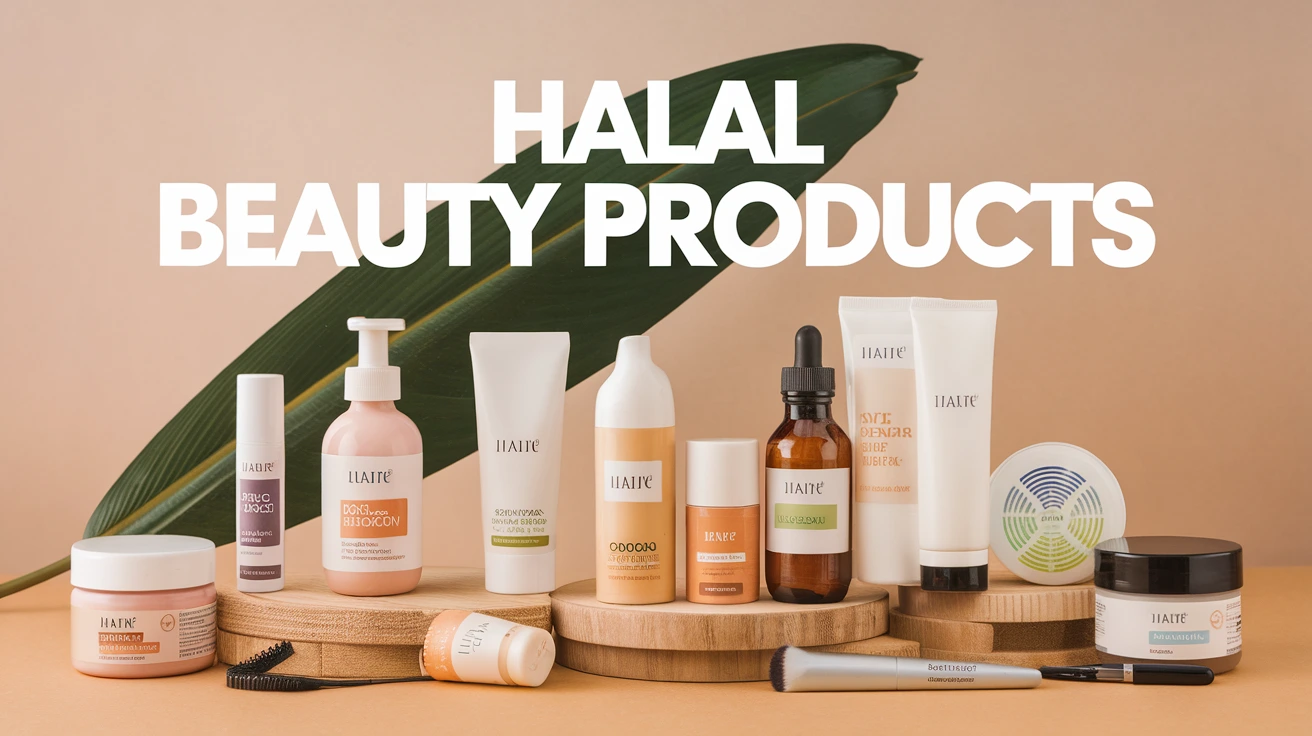
Halal beauty products are becoming increasingly popular among people who want cosmetics and personal-care items that align with halal principles. These products are designed with attention to ingredients, manufacturing processes, cleanliness, and ethical considerations.
From skincare and makeup to hair care and body products, halal beauty offers a wide range of choices. Understanding what makes a product halal can help consumers read labels more carefully, choose suitable cosmetics, and build a beauty routine that matches their personal values.
What Are Halal Beauty Products?
Halal beauty products are cosmetics, skincare items, hair care products, and personal-care products made according to principles considered permissible under Islamic guidelines. The word “halal” generally means permissible, while “haram” refers to something prohibited.
In cosmetics, halal considerations can involve ingredients as well as how products are produced, handled, stored, and transported. For this reason, halal beauty is broader than simply checking whether a product contains a particular ingredient.
Depending on the certification standard, consumers may look for considerations such as:
- Permissible ingredient sources
- Clean manufacturing practices
- Separation from prohibited substances
- Appropriate storage and handling
- Reliable halal certification where applicable
Why Halal Beauty Is Becoming More Popular
Interest in halal cosmetics has grown as consumers become more conscious about what they put on their skin and hair. Many shoppers now want greater transparency about ingredient sources and manufacturing methods.
Halal beauty is also becoming more accessible. Brands and retailers increasingly offer products designed for different skin types, hair textures, beauty preferences, and lifestyles.
Importantly, halal cosmetics are not only relevant to Muslim consumers. People from different backgrounds may also appreciate products that emphasize ingredient transparency, cleanliness, ethical sourcing, or carefully controlled production.
Common Ingredients in Halal Cosmetics
Ingredient sourcing is an important part of halal beauty. Some cosmetic ingredients can come from animal, plant, mineral, or synthetic sources, and their halal status may depend on the source and production method.
For example, certain ingredients used in skincare and makeup can have different origins. An ingredient may be acceptable when derived from a permissible source but problematic under a particular halal standard when obtained from a prohibited source.
When shopping, consumers can review the ingredient list and, when necessary, check information provided by the manufacturer or certification organization.
Common ingredients that shoppers may want to investigate include:
- Glycerin
- Collagen
- Gelatin
- Stearic acid
- Certain alcohol-based ingredients
- Animal-derived colorants or additives
The presence of an unfamiliar ingredient does not automatically mean that a product is non-halal. Its source and processing method may be important.
Halal Skincare Products
Halal skincare includes products such as cleansers, moisturizers, serums, sunscreens, masks, toners, and facial oils. As with other cosmetics, consumers interested in halal skincare may consider both the ingredients and the manufacturing process.
A good skincare routine should also be selected according to individual skin needs. A product being halal does not automatically mean that it is suitable for every skin type.
For example, people with dry skin may prefer moisturizing formulas, while those with oily or combination skin may look for lightweight products. Sensitive skin may require extra attention to fragrances and other potentially irritating ingredients.
When selecting halal skincare, consider:
- Your skin type
- The product’s intended purpose
- The full ingredient list
- Potential allergens or irritants
- Halal certification or manufacturer information
Halal Makeup and Cosmetics
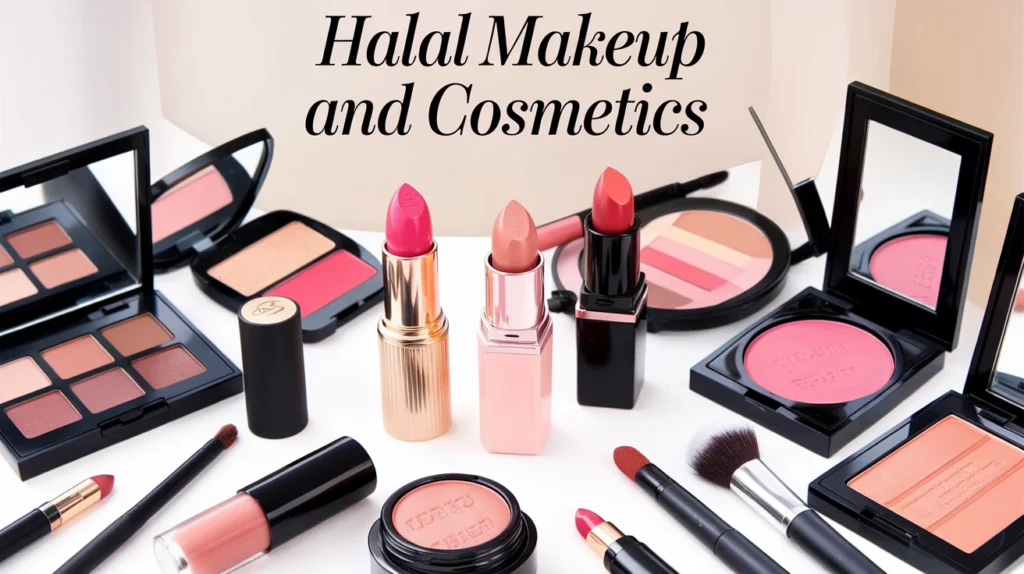
Halal makeup can include foundation, concealer, powder, blush, lipstick, mascara, eyeliner, eyeshadow, and other cosmetic products. The same basic principles regarding ingredients and production can apply to makeup as to skincare.
Some consumers pay particular attention to colorants, waxes, emollients, and other ingredients that may have animal-derived sources. However, ingredient names alone may not always reveal their origin.
When product information is unclear, checking the manufacturer’s documentation or halal certification can provide more reliable information than assuming an ingredient is halal or haram based only on its name.
A practical makeup checklist includes:
- Check the ingredient list.
- Look for recognized halal certification when relevant.
- Review manufacturer information.
- Consider your skin’s specific needs.
- Replace products according to their recommended use and hygiene requirements.
Halal Hair Care Products
Halal beauty also extends to hair care. Shampoos, conditioners, hair oils, styling creams, masks, treatments, and other products may be available in halal-certified or halal-conscious formulations.
Hair products can contain many different ingredients, including conditioning agents, oils, proteins, fragrances, and emulsifiers. Their source and processing may therefore be relevant to consumers seeking halal options.
At the same time, hair health should remain part of the selection process. A halal product should still match the needs of your scalp and hair type.
For example, consider whether your hair is:
- Dry or oily
- Curly, coily, wavy, or straight
- Chemically treated
- Color-treated
- Prone to breakage or buildup
Choosing products based on both halal requirements and hair needs can make a routine more practical.
Understanding Halal Certification
Halal certification can make it easier for consumers to identify products that have been reviewed according to a specific halal standard. Certification organizations may evaluate ingredients, manufacturing processes, facilities, and other relevant factors.
However, halal certification systems can differ between organizations and countries. A certification mark should therefore be understood in the context of the organization that issued it.
Consumers should avoid assuming that every product without a certification logo is automatically haram. Some manufacturers may provide detailed ingredient and production information without obtaining certification.
When researching a product, useful information may include:
- The name of the certification organization
- Certification details provided by the manufacturer
- Ingredient sourcing information
- Manufacturing information
- Official product documentation
How to Read Beauty Product Labels
Reading cosmetic labels is one of the most useful habits for informed shopping. Ingredient lists can help consumers understand what a product contains, although they may not always reveal the origin of every ingredient.
If an ingredient has a potentially animal-derived source, consumers who follow strict halal requirements may need additional information from the manufacturer or certification body.
It is also useful to distinguish between marketing claims and verified information. Terms such as “natural,” “clean,” “vegan,” and “cruelty-free” have different meanings and do not necessarily mean the same thing as halal.
For example, a vegan product may contain no animal-derived ingredients, but vegan status alone does not establish halal certification. Likewise, a natural product is not automatically halal.
Halal, Vegan, and Cruelty-Free: What’s the Difference?
Halal, vegan, and cruelty-free are related to different aspects of a beauty product. Understanding the distinction can prevent confusion when comparing cosmetics.
Halal generally focuses on permissibility according to Islamic principles, including relevant ingredients and production considerations.
Vegan generally means that a product does not contain animal-derived ingredients. However, vegan status does not necessarily address every issue considered by halal standards.
Cruelty-free generally relates to whether the product or its ingredients were tested on animals. It does not by itself determine whether a cosmetic is halal.
A product may have more than one of these characteristics, but one claim should not automatically be treated as proof of another.
Benefits of Choosing Halal Beauty Products
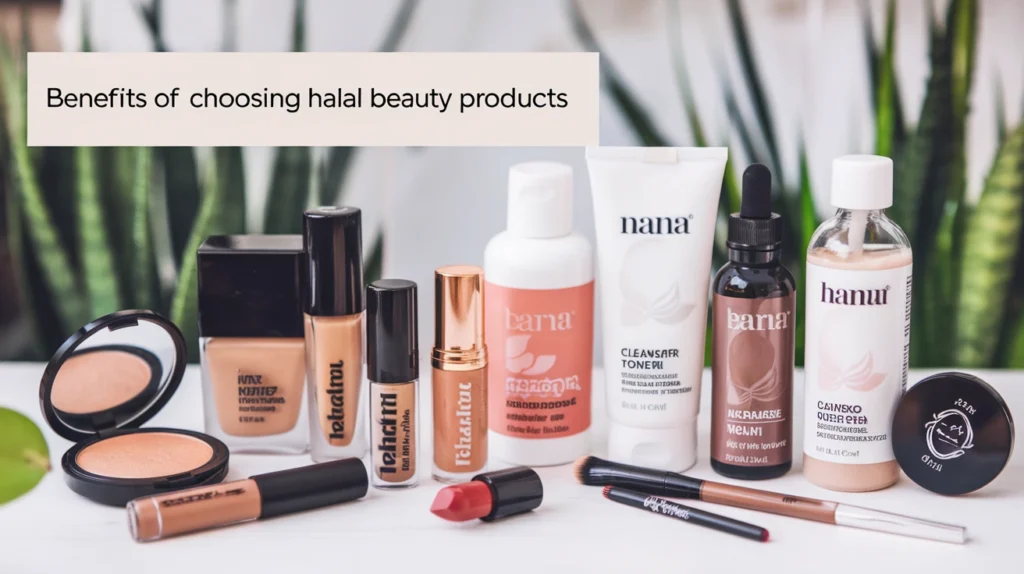
For consumers who follow halal principles, halal cosmetics can make beauty shopping more consistent with personal values. Clear ingredient information can also encourage shoppers to become more aware of what they use.
Another benefit is that halal beauty has encouraged greater discussion around ingredient sourcing, manufacturing transparency, and responsible product development.
However, halal status should not be confused with guaranteed safety or effectiveness. Cosmetic suitability still depends on factors such as formulation, skin type, allergies, product quality, and proper use.
Potential advantages include:
- Greater awareness of ingredient sources
- Alignment with personal or religious values
- Increased attention to manufacturing practices
- More informed cosmetic purchasing
- Access to a growing range of beauty categories
How to Build a Halal Beauty Routine
Creating a halal beauty routine does not require purchasing a large number of products. A simple routine can begin with a few essential items that meet your personal requirements and suit your skin, hair, and lifestyle.
For skincare, this may include a gentle cleanser, moisturizer, and daytime sun protection. Makeup users can add only the products they regularly need. Hair care can similarly focus on appropriate cleansing, conditioning, and styling products.
When introducing new products, try them gradually. This makes it easier to identify whether your skin or hair responds well to a particular formula.
A simple approach is to:
- Identify your main beauty needs.
- Check ingredients and product claims.
- Verify halal information when necessary.
- Choose products suited to your skin or hair.
- Introduce new products one at a time.
- Follow storage and usage instructions.
Tips for Buying Halal Beauty Products
Shopping for halal cosmetics becomes easier when you know what information to look for. Instead of relying only on product descriptions, review the packaging, ingredient list, certification details, and manufacturer’s information.
Online shoppers should be especially careful with vague claims. Product descriptions can sometimes be incomplete, so checking information from the official manufacturer or a recognized certification organization can provide greater confidence.
It is also wise to avoid making assumptions about individual ingredients. If the origin of an ingredient matters to you, seek clarification rather than relying on an unverified internet list.
Before buying, consider:
- Is the product certified or supported by reliable halal information?
- Are the ingredients clearly listed?
- Does the formula suit your skin or hair?
- Does the manufacturer provide useful sourcing information?
- Are the product’s storage and expiration instructions clear?
The Modern Relevance of Halal Beauty
Halal beauty has developed beyond a narrow cosmetic category. Modern consumers increasingly expect beauty companies to provide more information about ingredients, sourcing, production, sustainability, and ethical practices.
This demand for transparency has helped create opportunities for products designed around specific consumer requirements. Halal-conscious shoppers can now find options across skincare, cosmetics, hair care, fragrances, and personal care.
At the same time, consumers should continue to evaluate products carefully. A halal label can address specific religious requirements, but it does not replace normal cosmetic safety practices such as checking expiration dates, following instructions, and avoiding known allergens.
Conclusion
Halal beauty products provide consumers with beauty and personal-care options that can align with Islamic principles and individual values. Understanding ingredient sources, manufacturing practices, certification, and product labeling makes it easier to make informed choices.
Whether you are shopping for halal skincare, makeup, hair care, or other cosmetics, focus on both halal considerations and your personal beauty needs. Read labels carefully, verify unclear claims, and use products responsibly. A simple, informed routine can support healthy skin and hair while keeping your beauty choices consistent with your values.
FAQs
What are halal beauty products?
Halal beauty products are cosmetics and personal-care items formulated and produced according to applicable halal principles. Their ingredients, sourcing, handling, and manufacturing processes may all be considered.
Are halal beauty products only for Muslims?
No. Although halal cosmetics are especially relevant to Muslim consumers, anyone can choose them based on preferences for ingredient transparency, sourcing, production standards, or ethical considerations.
Are halal cosmetics always vegan?
No. Halal and vegan are different concepts. A halal product can contain certain animal-derived ingredients if they meet the applicable halal requirements, while vegan products avoid animal-derived ingredients.
How can I tell if a beauty product is halal?
Look for reliable halal certification or information from the manufacturer about ingredients and production. If the source of a particular ingredient is unclear, seek additional information before purchasing.
Are halal beauty products safe for everyone?
Halal status does not automatically guarantee that a product will suit every person. Check the ingredients for known allergens or irritants and choose products appropriate for your individual skin and hair needs.