Choosing environmentally friendly beauty products means looking beyond what a product does for your skin, hair, or body and considering how it affects the planet. These products can help reduce unnecessary packaging, limit waste, conserve resources, and support more responsible ingredient sourcing.
From refillable skincare containers to solid shampoo bars and biodegradable ingredients, there are many practical ways to make a beauty routine more sustainable. The key is to understand which claims genuinely matter and how to choose products that are both effective and environmentally responsible.
What Are Environmentally Friendly Beauty Products?
Environmentally friendly beauty products are cosmetics, skincare, haircare, and personal-care items designed with a lower environmental impact in mind. Their environmental benefits may come from recyclable or refillable packaging, responsibly sourced ingredients, reduced waste, concentrated formulas, or manufacturing processes that use fewer resources.
However, the term does not automatically mean that every part of a product is sustainable. A product may use natural ingredients but come in excessive packaging, while another may use synthetic ingredients but have a highly efficient formula and recyclable container.
When evaluating a sustainable beauty product, consider several factors together:
- Packaging materials and recyclability
- Ingredient sourcing and production
- Water and energy consumption
- Product concentration and longevity
- Manufacturing practices
- Disposal options after use
This broader approach makes it easier to distinguish meaningful environmental choices from simple marketing claims.
Why Sustainable Beauty Products Matter
The beauty industry uses large amounts of packaging, water, energy, and raw materials. Many traditional beauty products are sold in containers made from several different materials, which can make recycling difficult. Single-use items can also contribute to household waste.
Choosing sustainable personal care products can reduce some of these impacts. For example, a refill system can minimize the need for a new container each time a product is purchased, while concentrated formulas can reduce the amount of water and packaging needed during transportation.
Sustainable choices can also encourage manufacturers to improve their practices. As consumers look for lower-waste cosmetics, companies have greater incentive to develop durable packaging, responsible sourcing programs, and more efficient formulas.
Sustainable Packaging to Look For
Packaging is one of the easiest aspects of a beauty product to evaluate. Look for containers that are designed to be reused, refilled, recycled, or made with recycled materials.
Glass jars, aluminum containers, refill pouches, and certain recyclable plastics can all have useful applications. However, the best option depends on local recycling systems and how the packaging is actually used.
Consider these packaging features:
- Refillable containers
- Minimal outer packaging
- Recycled-content materials
- Easily separable components
- Reusable bottles and jars
- Clearly labeled disposal instructions
A reusable container is not automatically better if it is rarely reused. Similarly, recyclable packaging only provides an environmental benefit when suitable collection and recycling systems are available.
Natural and Responsibly Sourced Ingredients
Many eco-conscious consumers associate sustainability with natural ingredients. Natural ingredients can be appropriate choices, but “natural” does not automatically mean environmentally friendly.
The environmental impact of an ingredient depends on how it is grown, harvested, processed, transported, and packaged. Some plant-based ingredients require significant land or water resources, while some naturally occurring materials may be harvested unsustainably.
Responsible ingredient sourcing is therefore more important than simply choosing products labeled “natural.” Look for information about sustainable agriculture, ethical sourcing, traceability, and responsible harvesting when manufacturers provide it.
Common considerations include:
- Responsibly sourced botanical extracts
- Sustainable plant oils
- Traceable ingredients
- Efficient agricultural practices
- Avoidance of threatened natural resources
- Transparent sourcing information
Low-Waste Beauty Products for Everyday Routines
Reducing beauty waste does not require replacing every product at once. Small changes can make a routine more efficient and reduce unnecessary consumption.
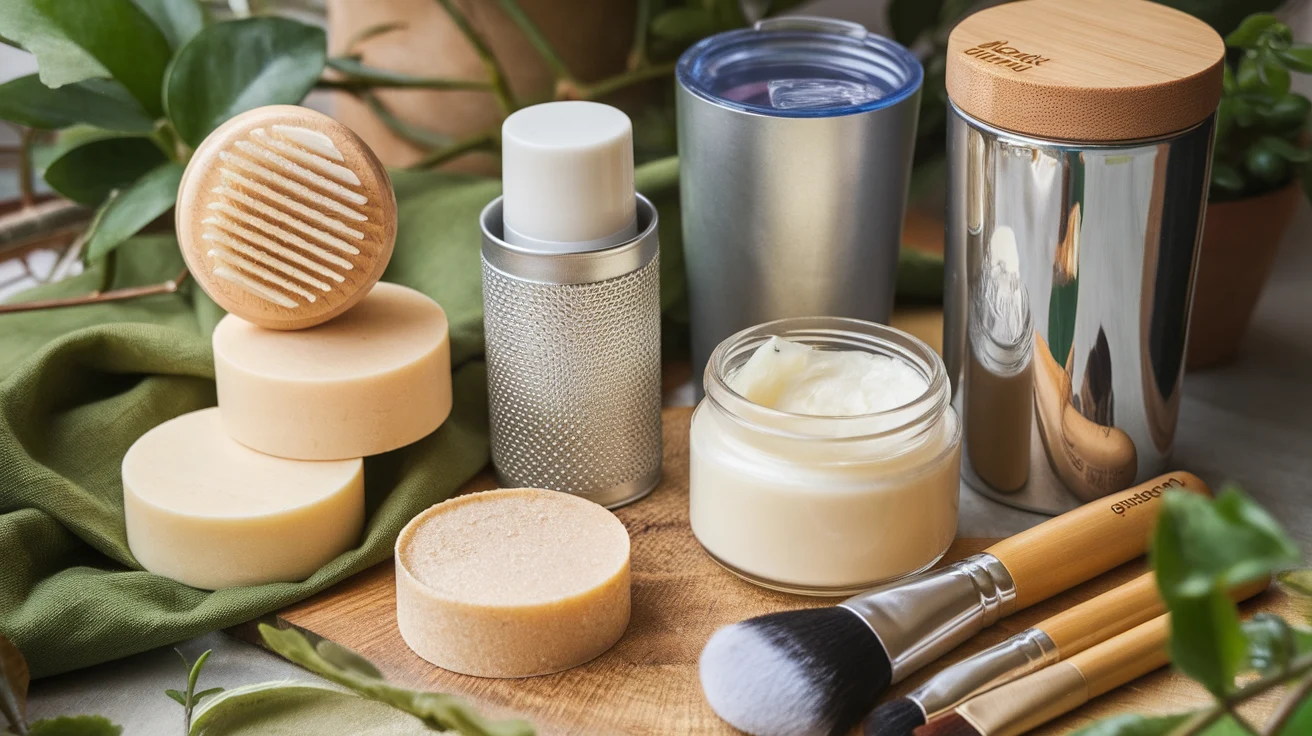
Solid beauty products are one option. Shampoo bars, conditioner bars, solid cleansers, and other concentrated products can use less packaging than comparable liquid products. Reusable makeup remover pads and washable applicators can also reduce dependence on disposable alternatives.
Other practical low-waste habits include:
- Finish products before buying replacements
- Choose concentrated formulas when practical
- Use reusable cleansing accessories
- Avoid unnecessary single-use products
- Buy larger sizes when they prevent excess packaging
- Store products properly to extend their useful life
The most sustainable product is often one that you actually use completely rather than replacing frequently because of changing trends.
Eco-Friendly Skincare Choices
Sustainable skincare starts with selecting products that match your actual needs. Buying fewer products and using them consistently can reduce packaging and product waste.
For example, a simple routine may require only a cleanser, moisturizer, and sunscreen, depending on individual skincare needs. Purchasing numerous products without using them completely can result in expired cosmetics and unnecessary waste.
Concentrated skincare formulas can also be useful because they may require less packaging and transportation space. Nevertheless, effectiveness and skin compatibility should remain important considerations. An environmentally preferable product is not useful if it does not work for your needs.
When choosing sustainable skincare, consider:
- Minimal and functional packaging
- Refillable options
- Long-lasting formulas
- Appropriate product sizes
- Clear ingredient information
- Proper storage and use
Sustainable Haircare Options
Haircare can generate considerable packaging waste because shampoos, conditioners, masks, and styling products are commonly sold in plastic bottles.
Solid shampoo and conditioner bars can reduce packaging and are often concentrated. Refillable haircare products provide another option, especially for people who prefer traditional liquid formulas.
The environmental value of a haircare product also depends on how much water, energy, and product is used during normal use. Using the correct amount and avoiding unnecessary washing can help reduce overall resource consumption.
For a more sustainable haircare routine, consider:
- Shampoo or conditioner bars
- Refillable bottles
- Concentrated formulas
- Recycled-content packaging
- Products designed for longer use
- Using only the amount you need
How to Choose Eco-Friendly Makeup
Makeup can be challenging from a sustainability perspective because products often combine different materials, include small components, and use packaging that may not be widely recyclable.
When shopping for sustainable cosmetics, examine the entire package rather than focusing on one environmental claim. A compact made from recycled material may still contain components that are difficult to separate or recycle.
Reusable palettes and refillable makeup systems can reduce packaging waste. Buying versatile products that serve multiple purposes can also help prevent unused cosmetics from accumulating.
Before purchasing makeup, ask:
- Can the container be refilled?
- Is the packaging recyclable locally?
- Is there unnecessary outer packaging?
- Will I use the entire product?
- Does the manufacturer explain its sustainability claims?
These questions encourage more thoughtful purchasing without requiring perfection.
How to Recognize Greenwashing
Greenwashing occurs when environmental marketing creates a stronger impression of sustainability than the available evidence supports. Beauty products may use terms such as “green,” “clean,” “earth-friendly,” or “natural” without clearly explaining what those claims mean.
Consumers should look for specific, verifiable information instead of relying on vague environmental language. For example, a clear statement about recycled packaging is more useful than an unsupported claim that a product is simply “planet friendly.”
Be cautious of:
- Vague environmental claims
- Excessive use of green imagery
- Unexplained “natural” or “clean” labels
- Claims without supporting details
- Packaging that appears sustainable but is difficult to recycle
- Products marketed as completely impact-free
No beauty product is likely to have zero environmental impact. Honest sustainability information should acknowledge trade-offs rather than suggesting perfection.
Sustainable Beauty Habits That Save Money
Eco-friendly beauty does not necessarily mean spending more. In many cases, reducing consumption can save money while also reducing environmental impact.
Using products efficiently is one of the simplest strategies. Instead of buying new items whenever a trend appears, finish products already in your collection. Refilling a container may also cost less than repeatedly purchasing a completely new package.
Buying fewer but more useful products can make a beauty routine simpler. Multi-purpose cosmetics can be particularly practical when they genuinely replace several separate products.
Simple habits include:
- Finish existing products before replacing them
- Avoid impulse purchases
- Choose refill systems when they are practical
- Buy products that suit your regular routine
- Store cosmetics correctly
- Repair or reuse suitable containers
Sustainability often begins with consumption habits rather than shopping for an entirely new collection.
How to Dispose of Beauty Products Responsibly
Choosing sustainable products is only part of the process. Disposal also matters because packaging can become waste when it reaches the end of its useful life.
First, check the product label for disposal instructions. Recycling rules vary significantly between communities, so a material accepted in one recycling program may not be accepted in another.
Before recycling a container, use the product completely when possible. Empty containers may need to be cleaned, separated, or sorted according to local requirements.
For better disposal practices:
- Follow local recycling guidelines
- Empty containers before recycling when required
- Separate removable components when appropriate
- Use manufacturer take-back programs when available
- Never pour unsuitable cosmetics into drains
Proper disposal helps ensure that recyclable materials have a better chance of being processed correctly.
Building a More Sustainable Beauty Routine
You do not need to change your entire routine immediately. A gradual approach can be more practical and prevent usable products from being thrown away unnecessarily.
Start by identifying the products you use most frequently. Replace them with lower-waste alternatives when they naturally run out. This approach avoids creating additional waste simply to adopt a new sustainability goal.
Next, pay attention to packaging, product lifespan, ingredient sourcing, and disposal options. Over time, these factors can become part of your normal purchasing decisions.
A practical sustainable beauty routine might focus on:
- Buying only products you need
- Choosing durable or refillable packaging
- Reducing disposable accessories
- Selecting responsibly sourced ingredients
- Using products efficiently
- Disposing of packaging correctly
The goal is not perfection. Consistent, realistic improvements can make a beauty routine more resource-conscious over time.
Frequently Asked Questions
Are environmentally friendly beauty products better for the planet?
They can have a lower environmental impact when they reduce packaging waste, use resources efficiently, or support responsible ingredient sourcing. However, the overall sustainability of a product depends on its complete lifecycle rather than one feature.
What is the most sustainable beauty packaging?
Refillable and reusable packaging can be highly practical because the original container can remain in use for longer. Recyclable packaging can also be useful where reliable recycling facilities exist.
Are natural beauty products always environmentally friendly?
No. Natural ingredients can still require significant land, water, energy, or transportation resources. Sustainability depends on how ingredients are sourced, processed, packaged, and used.
How can I make my beauty routine more sustainable?
Start by buying fewer unnecessary products, finishing what you already own, choosing refillable or lower-waste packaging, reducing disposable items, and following local recycling instructions.
Is sustainable beauty more expensive?
Not necessarily. Although some environmentally focused products have higher upfront prices, refill systems, concentrated formulas, and reduced purchasing can sometimes lower long-term costs.
Conclusion
Environmentally friendly beauty products can help make personal-care routines more responsible by reducing unnecessary packaging, waste, and resource use. The best choices are not simply products labeled “green” or “natural”; they are products whose ingredients, packaging, manufacturing, use, and disposal are considered together.
Start with manageable changes: buy only what you need, choose reusable or refillable options where practical, use products completely, and dispose of packaging responsibly. Small, consistent decisions can make everyday beauty habits more sustainable without sacrificing practicality or effectiveness.