Finding a favorite beauty product only to discover that it has been discontinued can feel surprisingly frustrating. Maybe it was the foundation that matched your skin perfectly, a moisturizer that never irritated your face, or an old-school lip color that became part of your signature look. Beauty products often become more than simple cosmetics. They can become part of our routines, confidence, memories, and self-care rituals.
However, discontinued beauty products also raise practical questions. Is an old product still safe to use? Can you find an authentic replacement? What should you look for in a reformulated version? And how can you choose a modern alternative without damaging your skin barrier?
This guide explains everything beginners and experienced beauty lovers need to know about discontinued cosmetics, skincare products, makeup favorites, expired formulas, replacements, storage, safety, and smarter product shopping. The goal is not simply to recreate an old routine but to help you build a healthier and more reliable one.
Featured Snippet: What Are Discontinued Beauty Products?
Discontinued beauty products are cosmetics, skincare items, haircare products, or personal-care formulas that a brand no longer manufactures or officially sells. They may disappear because of low demand, ingredient changes, packaging updates, regulations, reformulation, business decisions, or seasonal product cycles.
What Discontinued Beauty Products Are and Why Brands Remove Them
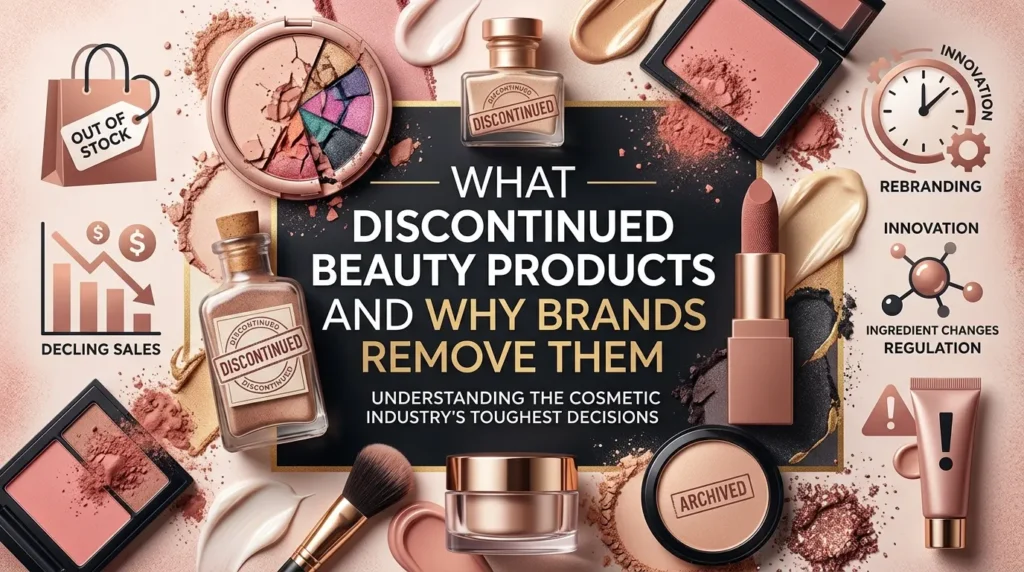
A discontinued beauty product is an item that a manufacturer has stopped producing or selling as part of its regular product range. The term can apply to almost anything, including foundation, lipstick, mascara, cleanser, serum, sunscreen, moisturizer, toner, hair products, and fragrance.
Discontinuation does not automatically mean that a product was bad. In many cases, brands retire perfectly popular products for business or formulation reasons.
Common reasons include:
- Low sales or changing customer demand.
- Ingredient availability problems.
- Packaging changes.
- New cosmetic regulations.
- Reformulation or product improvement.
- Manufacturing costs.
- Brand repositioning.
- Changes in consumer preferences.
- Seasonal or limited-edition launches.
For example, a lightweight foundation may disappear when a brand introduces a new complexion line. The new foundation may perform similarly, but its texture, finish, ingredients, or shade range can still feel different.
From a skincare perspective, this matters because your skin may respond differently to a replacement. A product that worked beautifully for dry skin may have contained ceramides, glycerin, squalane, or hyaluronic acid, while the newer version may emphasize a lighter texture.
Beginner tip: Do not choose a replacement based only on the product name. Compare the ingredient list, texture, finish, skin type, and intended purpose.
A commonly overlooked point is that discontinued does not mean expired. A product can be discontinued today and still have been manufactured recently. Likewise, an old product sitting in a drawer can be expired even if collectors are still selling it.
Safety rule: Always separate the questions of availability and product safety.
Why Favorite Skincare and Makeup Products Get Discontinued
Beauty companies constantly change their collections. A product may have existed for ten years and still disappear unexpectedly.
One major reason is consumer behavior. Trends change quickly. Matte makeup may become less popular while skin tints and radiant finishes gain attention. Skincare consumers may shift from complicated routines toward barrier-focused formulas.
Ingredient trends can also influence product development. Ingredients such as niacinamide, ceramides, peptides, azelaic acid, vitamin C, and retinoids have become widely discussed, encouraging brands to create products around specific concerns.
Sometimes a company simply wants a cleaner product lineup.
Consider a hypothetical moisturizer that contains five separate botanical extracts. If customers prefer simpler barrier-supporting formulas, the company might replace it with a streamlined moisturizer featuring glycerin, ceramides, and fatty acids.
That does not necessarily mean the old product was ineffective. It means the company changed its strategy.
What you should look at before replacing it
- Original product purpose.
- Skin type.
- Key ingredients.
- Texture.
- Fragrance level.
- Finish.
- Packaging.
- Intended use.
- Your skin’s current condition.
Expert-informed tip: If your skin has changed since you first purchased the discontinued product, do not automatically recreate your old routine. Skin can become drier, oilier, more sensitive, or more reactive over time.
The benefit of reassessing your routine is that you may discover an even better product instead of chasing an exact duplicate.
How to Tell Whether a Beauty Product Is Truly Discontinued
Sometimes a product is not permanently discontinued. It may simply be temporarily unavailable.
Brands can experience:
- Stock shortages.
- Distribution delays.
- Regional availability changes.
- Website inventory problems.
- Packaging transitions.
- Temporary manufacturing pauses.
Look at the brand’s official website first. If the product has disappeared completely and the brand has announced a replacement, that is a stronger indication of discontinuation.
Retailer listings can be misleading. A product marked out of stock is not necessarily discontinued.
Signs that a product may be discontinued
- The official brand website no longer lists it.
- The brand announces a replacement.
- Multiple authorized retailers stop restocking it.
- The product is marked discontinued rather than temporarily unavailable.
- Customer-service representatives confirm that production has ended.
- A newer version has replaced the original.
Best practice: Check the brand before purchasing from a third-party seller.
Do not assume a product is discontinued simply because your local store stopped carrying it. Retailers regularly change their product selections.
For expensive skincare, authenticity matters even more. A suspiciously cheap product from an unknown seller may be old, improperly stored, counterfeit, or otherwise unreliable.
How to Safely Find Discontinued Cosmetics and Skincare
Finding discontinued beauty products can become a treasure hunt, especially when the product has sentimental value.
However, scarcity can create opportunities for questionable sellers. A discontinued item should not automatically command a premium price.
When searching, prioritize:
- Official brand channels.
- Authorized retailers.
- Reputable beauty stores.
- Established resale platforms with buyer protections.
- Sellers who provide clear product photographs and batch information.
Avoid listings with vague descriptions, damaged packaging, unusual labeling, or unrealistic prices.
Before buying a discontinued product, ask:
- Is the packaging authentic?
- Is the seal intact?
- Can the seller provide batch information?
- How was it stored?
- How old is it?
- Has it been opened?
- Is the texture or color visibly altered?
- Does the seller have credible reviews?
Warning: Avoid buying used mascara, opened eye products, or old products that have been contaminated. Eye-area products deserve extra caution because microbial contamination can create significant problems.
For skincare, an unopened product is generally preferable to a previously opened one, but unopened does not mean it lasts forever.
Advanced tip: If you are looking for a discontinued product because of a specific ingredient, search by that ingredient and product function rather than by brand name alone. This often produces better modern alternatives.
How to Check Old Beauty Products for Expiration and Safety
The biggest mistake people make with discontinued beauty products is confusing rarity with safety.
A discontinued lipstick is not automatically dangerous, but age, storage, contamination, and formulation all matter.
Look for changes such as:
- Unusual smell.
- Separation.
- Color changes.
- Texture changes.
- Crumbling.
- Dryness.
- Watery consistency.
- Swelling or damaged packaging.
- Unexpected skin irritation.
Some products naturally change slightly over time, but obvious changes are a reason to stop using them.
Pay particular attention to products containing water, because water-based formulas can become more vulnerable to microbial growth after opening.
Mascara and liquid eyeliner deserve especially careful treatment because they are repeatedly exposed to the eye area and air.
Safer habits
- Do not share cosmetics.
- Keep applicators clean.
- Close containers tightly.
- Avoid storing products in excessive heat.
- Do not add water to dried mascara.
- Avoid using products that smell or look unusual.
- Follow the manufacturer’s period-after-opening guidance when available.
Important: If a product causes burning, swelling, persistent redness, or significant irritation, stop using it. For severe or ongoing reactions, consult a dermatologist or appropriate healthcare professional.
How to Find a Replacement for a Discontinued Favorite
The best replacement is not always an exact duplicate.
Instead, identify what you actually loved about the original product.
Maybe it offered:
- Natural-looking coverage.
- A dewy finish.
- Long wear.
- A lightweight texture.
- Fragrance-free skincare.
- Strong hydration.
- A particular lipstick undertone.
- A specific ingredient combination.
Create a simple replacement profile.
Original FeatureWhat to Look ForLightweight moisturizerGel-cream or lotion textureDewy foundationRadiant or satin finishStrong hydrationGlycerin, hyaluronic acid, ceramidesOil-control makeupSoft-matte or oil-balancing formulaGentle cleanserFragrance-free, low-irritation formulaBrightening serumVitamin C, niacinamide, or other suitable activesBarrier supportCeramides, fatty acids, humectants
Beginner tip: Replace one product at a time. If you change five products simultaneously, it becomes difficult to know which one your skin likes or dislikes.
Patch testing can also be useful when introducing a new skincare product, particularly if your skin is sensitive or reactive.
For active ingredients, introduce products gradually rather than immediately copying an advanced routine.
Comparing Discontinued Formulas With Newer Alternatives
A newer product with the same product category does not necessarily have the same formula.
For example, an old serum may have relied heavily on ascorbic acid, while a newer formula from the same brand may use a different vitamin C derivative. Both products may target similar concerns, but they can behave differently.
When comparing formulas, check:
- Active ingredients.
- Ingredient concentration when disclosed.
- Fragrance.
- Alcohol content.
- Texture.
- pH when relevant.
- Skin-type suitability.
- Finish.
- Packaging.
- Preservation system.
- Your personal tolerance.
Do not judge a product solely by how impressive its ingredient list looks.
A simple moisturizer can be extremely useful if it supports your skin barrier and fits your routine. Likewise, a complicated serum is not automatically better.
A smart comparison method
Ask three questions:
Does it perform the same job?
Does it suit my current skin type?
Can I use it consistently without irritation?
Consistency is often more valuable than owning the most complicated product.
Discontinued Makeup Products and Finding Shade Matches
Makeup discontinuations can be especially frustrating because shade matching involves more than color names.
A discontinued foundation shade called Medium Beige may not match a new Medium Beige shade from the same company.
Compare:
- Undertone.
- Depth.
- Coverage.
- Finish.
- Oxidation.
- Formula.
- Skin preparation.
For lipstick, consider undertone and intensity. A discontinued rose lipstick could have been cool, neutral, warm, muted, or bright.
For foundation, compare the old and new shades in natural daylight when possible.
Beginner makeup tip
Do not purchase an expensive replacement solely because the online swatch looks similar. Screen settings can alter color perception.
Best practice: Buy from retailers that offer returns when available, especially when purchasing complexion products.
For discontinued eye makeup, be more cautious. An old eyeshadow palette may still look beautiful, but age and storage matter. Cream eye products can change faster than some powder formulas.
Warning: Never use visibly contaminated or unusually changed eye makeup simply because it is collectible or difficult to replace.
Discontinued Skincare Products and Ingredient Compatibility
Replacing discontinued skincare requires more care than replacing a decorative makeup product because active ingredients can influence how your skin behaves.
Suppose your old moisturizer contained ceramides and glycerin and kept your skin comfortable. A replacement with a strong exfoliating acid may be completely unsuitable even if both products are marketed as skincare.
Think in terms of function.
Match the function first
- Hydration.
- Barrier support.
- Cleansing.
- Oil control.
- Brightening.
- Exfoliation.
- Acne care.
- Anti-aging support.
- Sun protection.
Then consider the ingredients.
For beginners, avoid introducing several powerful actives simultaneously.
A routine containing a retinoid, exfoliating acid, strong vitamin C product, and multiple exfoliants may overwhelm some skin types.
Professional tip: If you have persistent acne, eczema-like symptoms, severe sensitivity, unexplained rashes, or ongoing pigmentation concerns, professional dermatology advice is more appropriate than continuously experimenting with discontinued products.
How Skin Types Affect Replacement Product Choices
Your replacement should match your skin’s present needs.
Dry skin
Look for humectants, emollients, and barrier-supporting ingredients. Creamier textures may feel more comfortable.
Oily skin
Lightweight moisturizers and non-heavy textures may be preferable. Remember that oily skin still needs hydration.
Combination skin
You may need different textures in different areas of the face.
Sensitive skin
Simple formulas with fewer potential irritants can be easier to tolerate. Fragrance-free options may be worth considering.
Normal skin
Focus on maintaining a balanced routine instead of adding unnecessary products.
A common mistake is choosing products based entirely on labels such as natural, clean, luxury, or clinical.
Marketing language cannot replace ingredient evaluation and personal tolerance.
Frequently overlooked tip: Your skin type can change with weather, age, hormones, environment, and skincare habits. Reassess your routine periodically.
How to Rebuild a Discontinued Beauty Routine
If several favorite products have disappeared, rebuild your routine from the foundation up.
A simple routine can include:
Morning
- Gentle cleanser if needed.
- Hydrating or targeted serum.
- Moisturizer.
- Broad-spectrum sunscreen.
Night
- Remove makeup and sunscreen.
- Gentle cleanser.
- Treatment product if appropriate.
- Moisturizer.
You do not need ten products to have an effective routine.
Once your basic routine feels comfortable, you can consider targeted additions.
Weekly routine
Avoid automatically exfoliating every day. Your skin may benefit more from a balanced schedule than aggressive treatment.
Beginner strategy: Introduce only one new active at a time.
Advanced strategy: Track product changes in a simple skincare journal. Record the product, date introduced, frequency, and noticeable reactions.
This can help identify patterns.
Seasonal adjustments
Cold weather may increase dryness. Hot and humid weather can make heavier textures feel uncomfortable.
The best routine is flexible rather than rigid.
Common Mistakes When Buying Discontinued Beauty Products
Scarcity can encourage impulsive buying.
One common mistake is paying a huge premium for a product without checking whether a modern alternative performs similarly.
Another mistake is buying from an unreliable seller because the product is no longer available through normal retail channels.
Other mistakes include:
- Buying opened skincare without knowing its age.
- Purchasing old mascara.
- Ignoring unusual product smells.
- Trusting counterfeit-prone listings.
- Buying multiple backups without checking shelf life.
- Assuming discontinued means superior.
- Choosing a replacement based only on packaging.
- Introducing several new products at once.
- Ignoring your current skin type.
- Using old products because they have sentimental value.
Discontinued product buying checklist
- Confirm that the product is actually discontinued.
- Check the seller.
- Inspect packaging.
- Ask about storage.
- Check batch or manufacturing information when available.
- Avoid questionable eye products.
- Compare modern alternatives.
- Consider your current skin needs.
- Avoid unrealistic bargains.
- Stop using anything that changes dramatically or irritates your skin.
Best practice: A healthy routine is more important than recreating a nostalgic one perfectly.
Myths Versus Facts About Discontinued Beauty Products
Beauty forums and social media can create strong opinions about discontinued formulas.
Myth: Discontinued means the product was unsafe.
Fact: Discontinuation can happen for many business, formulation, packaging, or demand-related reasons. It does not automatically indicate a safety problem.
Myth: Older beauty products are always better.
Fact: Some people may prefer an older formula, but age does not guarantee better performance or safety.
Myth: A product is safe because it is unopened.
Fact: Unopened products can still age over time, especially when exposed to heat or poor storage conditions.
Myth: The replacement from the same brand will be identical.
Fact: Reformulated products can have different ingredients, texture, finish, or performance.
Myth: Natural products never expire.
Fact: Natural or plant-derived ingredients can still degrade, and cosmetic products require appropriate preservation and storage.
Myth: More active ingredients mean better skincare.
Fact: A routine should match your skin’s needs. Too many active ingredients can increase irritation for some users.
The most reliable approach is to focus on evidence, ingredient information, product condition, and your skin’s response.
Storage, Preservation, and Product Safety Tips
Proper storage can help protect beauty products during their usable life.
Keep most products away from excessive heat, direct sunlight, and unnecessary moisture.
Bathrooms can become warm and humid, so not every product benefits from long-term bathroom storage.
Better storage habits
- Keep lids tightly closed.
- Store products according to manufacturer instructions.
- Avoid direct sunlight.
- Keep jars and applicators clean.
- Do not share products.
- Avoid repeatedly touching formulas with dirty fingers.
- Keep makeup brushes clean.
- Check products regularly for changes.
For discontinued products, storage history becomes especially important because you may not know how long the product has been sitting in someone’s inventory.
Warning: Do not attempt to revive an old cosmetic by adding water, oils, alcohol, or other ingredients. Changing a product’s formulation can affect its stability and preservation.
If a product has separated, developed an unusual odor, changed color significantly, or caused unexpected irritation, discontinue use.
When in doubt, replacing a questionable cosmetic is usually a better choice than taking unnecessary risks.
Best Alternatives and Smarter Beauty Shopping Strategies
The best response to discontinued beauty products is not panic buying. It is learning how to shop by function, ingredients, and skin needs.
Start by identifying what made your old favorite special.
Was it:
- The finish?
- The shade?
- The texture?
- The ingredient profile?
- The fragrance?
- The wear time?
- The skin feel?
- The simplicity of the formula?
Then search for products that match those characteristics.
Smart replacement strategy
one: Write down the original product’s purpose.
wo: Identify three to five important characteristics.
three: Review ingredient lists.
four: Compare products from reputable retailers.
five: Start with the smallest practical size when possible.
six: Introduce the replacement gradually.
seven: Track how your skin responds.
Modern skincare also offers many useful alternatives to older routines. Barrier-focused skincare, gentle cleansing, daily sunscreen, balanced hydration, and targeted treatments can create a simpler approach.
The biggest beauty trend worth keeping is not collecting every new launch. It is building a routine you can use consistently.
Professional-informed buying advice
If a discontinued product worked well for years, it is reasonable to miss it. But your skin does not need the exact same product forever.
Prioritize skin health, product safety, ingredient suitability, and consistency over nostalgia.
If you have a persistent or serious skin concern, consult a dermatologist instead of relying solely on product recommendations from social media.
Conclusion
Discontinued beauty products can bring back memories, solve a very specific beauty need, or remind you of a routine that once made you feel confident. However, finding an old favorite should never mean compromising your skin’s health.
The smartest approach is to understand why you loved the original product, identify its key features, and search for a safe modern alternative. Pay attention to ingredients, skin type, formulation, storage, expiration, and product authenticity rather than relying only on packaging or brand reputation.
Healthy beauty is not about owning every product that disappears from the shelves. It is about creating a routine that supports your skin, fits your lifestyle, and makes you feel comfortable and confident.
If an old favorite is gone, think of it as an opportunity to reassess your routine. Your next favorite may already be waiting in a newer, safer, and better-suited formula.
FAQs
What does discontinued beauty product mean?
A discontinued beauty product is a cosmetic, skincare, haircare, or personal-care item that a manufacturer has stopped producing or officially selling as part of its regular range.
Can discontinued beauty products still be safe to use?
They can be safe if they are still within their appropriate usable period, were stored correctly, and show no signs of deterioration. Discontinued status alone does not determine safety.
Should I buy discontinued makeup in bulk?
Usually, there is little reason to buy large quantities unless you can realistically use the products within their usable period. Buying excessive backups can lead to waste and expired cosmetics.
How do I replace a discontinued skincare product?
Identify what the original product did for your skin, then compare modern products based on function, ingredients, texture, skin type, and tolerance. Introduce replacements gradually.
Are discontinued skincare products better than new formulas?
Not necessarily. Some users may prefer an older formula, but newer products can include improved formulations, packaging, ingredient combinations, or updated product technology.
Can I use old discontinued mascara?
Extra caution is necessary with old eye products. If mascara is old, dried out, contaminated, unusually scented, or has been opened for a long time, replacing it is safer than trying to preserve it.
How do I know if an old beauty product has gone bad?
Look for unusual odor, major color changes, separation, altered texture, contamination, damaged packaging, or unexpected irritation. When the product seems questionable, stop using it.
What should I do if a discontinued product caused skin irritation?
Stop using it and simplify your routine. Avoid repeatedly testing a product that causes a reaction. If symptoms are significant, persistent, or worsening, consult a dermatologist or healthcare professional.
Are discontinued products worth more money?
Some collectible or highly sought-after beauty products may command higher resale prices, but scarcity does not necessarily mean better quality. Evaluate authenticity, condition, age, and usefulness before paying a premium.
What is the most important rule when buying discontinued beauty products?
Prioritize authenticity, product condition, storage, age, skin compatibility, and safety. Never use a questionable product simply because it is rare or difficult to replace.