Introduction
Beauty is not only about looking polished. It is also about feeling comfortable in your own skin and creating small moments of self-care that support your overall wellness. For many people, homemade beauty products offer an appealing way to slow down, simplify a routine, and understand exactly what goes onto the skin.
A homemade face mask, body scrub, hair treatment, or moisturizing oil can feel wonderfully personal. You can choose simple ingredients, adjust the texture, and make small batches instead of collecting dozens of products.
But homemade does not automatically mean harmless. Natural ingredients can irritate the skin, and DIY products containing water can become contaminated with bacteria or fungi if they are poorly prepared or stored.
The smartest approach is therefore not “everything from the kitchen is safe.” It is simple ingredients, sensible formulas, clean preparation, limited storage, and realistic expectations.
This guide explains how to make homemade beauty products more responsibly, which ingredients are useful, which popular DIY hacks deserve caution, and how to build a simple routine for different skin types.
Featured Snippet
Homemade beauty products are DIY skincare, haircare, and body-care preparations made from selected ingredients at home. Safe options usually use simple, low-risk ingredients, fresh small batches, clean containers, and gentle application. Avoid harsh acids, undiluted essential oils, abrasive scrubs, and poorly preserved water-based mixtures.
What Homemade Beauty Products Are and How DIY Skincare Works
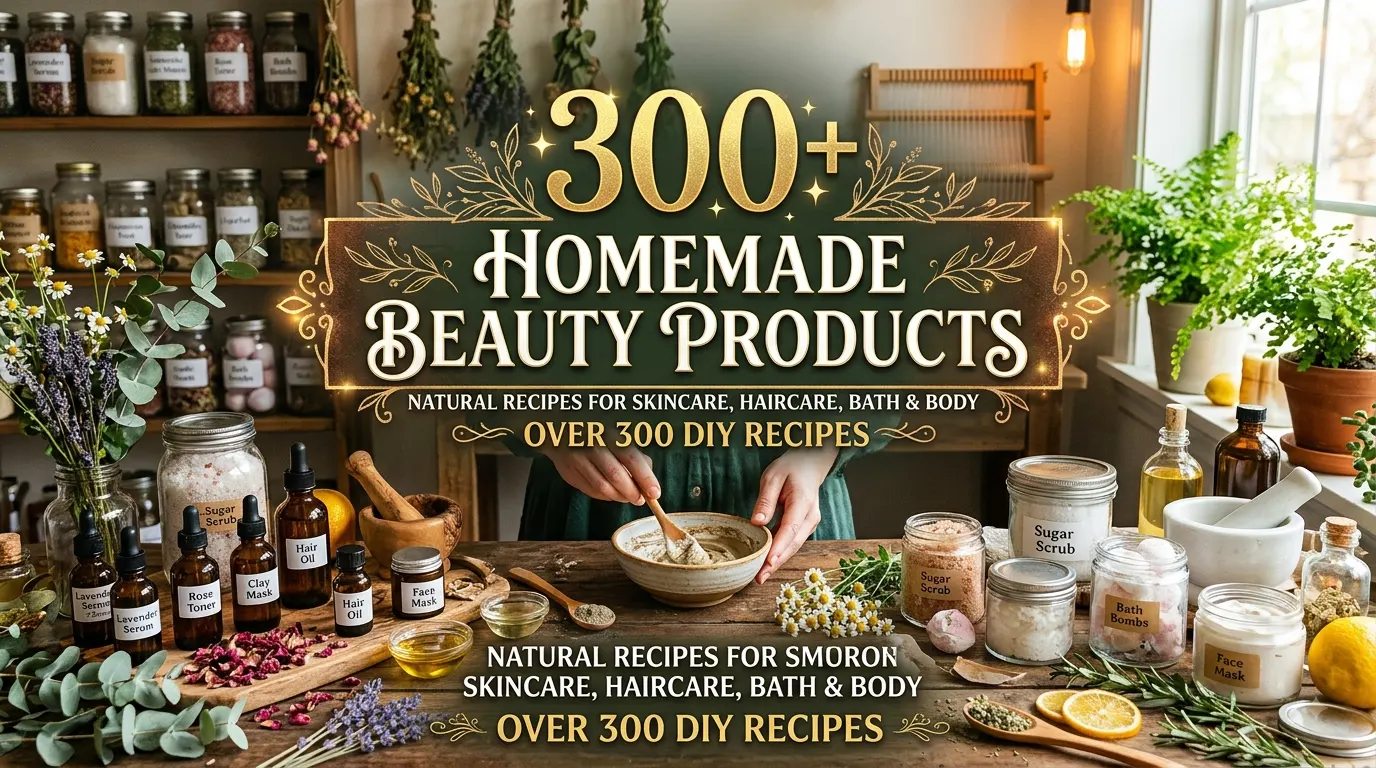
Homemade beauty products are personal-care preparations you create yourself rather than buying them ready-made. They can include face masks, body scrubs, hair treatments, bath soaks, lip care, facial oils, and simple moisturizing preparations.
The way a DIY product works depends on its ingredients. A moisturizing ingredient helps reduce dryness. An oil can soften the skin and reduce moisture loss. A gentle exfoliant can loosen dead surface cells. A clay mask can temporarily absorb excess oil from the skin’s surface.
The important distinction is between a product that supports the skin barrier and one that simply creates a dramatic sensation.
For example, a mask that feels intensely tingly is not necessarily working better. Burning, prolonged redness, swelling, or itching can indicate irritation or an allergic reaction rather than a beauty benefit.
Beginner approach
Start with one or two ingredients instead of creating a complicated recipe. This makes it easier to understand how your skin responds.
A simple routine might include:
- A gentle cleanser
- A plain moisturizer
- Sunscreen in the daytime
- One simple DIY treatment occasionally
Advanced approach
Experienced DIY formulators need to think beyond ingredients. pH, preservation, packaging, contamination, concentration, stability, and ingredient compatibility all matter.
Commercial cosmetics are often developed with testing and controlled manufacturing processes. FDA guidance notes that cosmetic manufacturers are responsible for product safety, and contamination can occur through raw materials, water, packaging, storage, or consumer handling.
Best practice
Use homemade products as an occasional addition to a sensible skincare routine, not as a replacement for evidence-based treatment when you have persistent acne, eczema, rosacea, severe dryness, pigmentation, or another diagnosed skin condition.
Benefits of DIY Beauty and Natural Skincare at Home
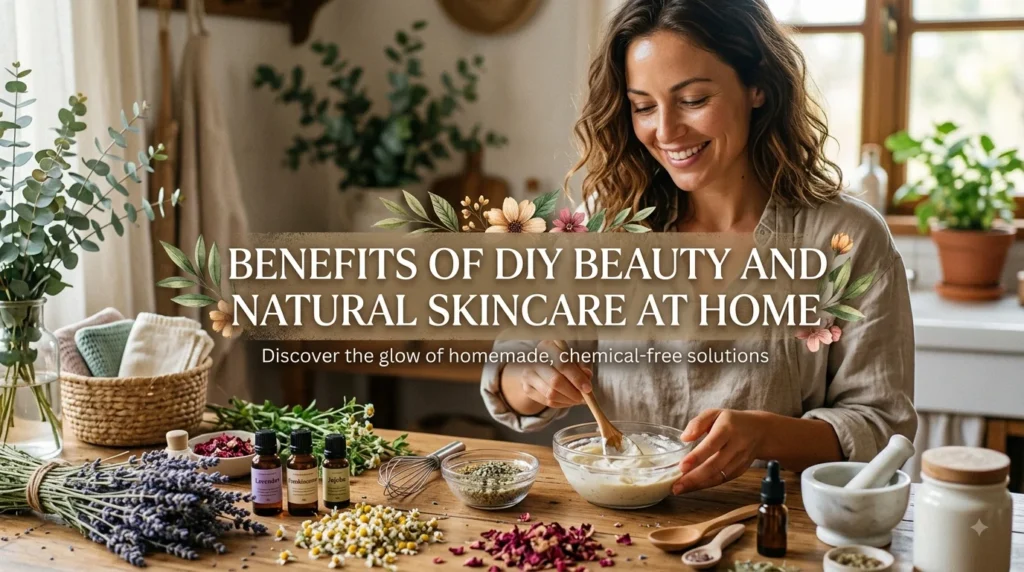
One major attraction of homemade beauty products is control. You decide which ingredients to use, how much to prepare, and when to discard the mixture.
DIY beauty can also make skincare more affordable. A simple oatmeal-based mask, for example, can be inexpensive compared with constantly buying novelty treatments.
Another benefit is customization. Someone with dry skin may prefer a more emollient preparation, while someone with oily skin may prefer a lightweight treatment.
Potential benefits include:
- Ingredient awareness
- Small-batch preparation
- Customization
- Reduced packaging for some simple preparations
- A relaxing self-care ritual
- Potentially lower cost
- The ability to avoid a known personal irritant
However, DIY beauty has limits.
“Natural” is not a synonym for “safe.” FDA guidance specifically warns that choosing ingredients marketed as natural or organic does not guarantee safety.
Real-life example
Imagine someone with dry skin who mixes a small amount of plain oatmeal with water immediately before use. They may find the ritual soothing and comfortable.
Now compare that with someone who makes a large jar of an oatmeal-and-water mixture, leaves it in a warm bathroom for several weeks, and repeatedly dips wet fingers into it. The second approach creates a very different safety problem.
When to use DIY beauty
Homemade treatments are most appropriate for simple cosmetic care, such as occasional cleansing, conditioning, moisturizing, or gentle pampering.
When to avoid it
Do not use a homemade preparation as a substitute for medical treatment. Also avoid experimenting on broken, infected, severely inflamed, or freshly irritated skin.
Best Homemade Ingredients for Healthy Skin and Natural Glow
The best DIY ingredients are not necessarily the trendiest ones. Look for ingredients with a straightforward purpose and a reasonable safety profile.
Colloidal oatmeal or finely prepared plain oatmeal is a popular choice for gentle skin-soothing preparations. It can be particularly appealing when the skin feels dry or uncomfortable.
Honey is commonly used in cosmetic DIY recipes because it is humectant and has a pleasant texture. However, household honey should not be treated as a medical wound treatment.
Plant oils such as sunflower or jojoba oil can provide emollience. They can make dry skin feel softer by helping reduce moisture loss.
Plain yogurt contains lactic acid, but kitchen yogurt is not a standardized cosmetic exfoliant. Sensitive skin may react to it, so keep contact brief and stop if irritation develops.
Aloe vera gel can feel cooling and hydrating, but homemade fresh plant preparations are difficult to preserve safely. A properly formulated commercial aloe product can be a more predictable option.
Ingredients requiring extra caution
Avoid casually applying:
- Lemon or lime juice
- Undiluted essential oils
- Strong vinegar
- Baking soda
- Undiluted acids
- Coarse salt
- Rough sugar crystals on facial skin
- Toothpaste
- Fragrance-heavy mixtures
Essential oils deserve particular attention. DermNet notes that several essential oils can cause allergic contact dermatitis, while undiluted oils can also cause irritation and sensitization.
Product-selection advice
If you are buying an ingredient specifically for skincare, choose a reputable supplier and check the ingredient’s intended cosmetic use. Food-grade does not automatically mean skin-appropriate.
Frequently overlooked tip
Simple is often better. A recipe with three sensible ingredients can be easier to evaluate than one containing ten trendy botanicals.
Easy Homemade Face Masks for Different Skin Types
Face masks are among the most popular homemade beauty products because they are easy to prepare and feel like a small spa treatment.
For dry skin, a simple oatmeal-based mask can be more appropriate than an aggressive exfoliating mask. Mix finely ground plain oats with enough water to create a soft paste and apply gently.
For normal skin, you can experiment with simple hydrating or soothing combinations, provided every ingredient is tolerated.
For oily skin, a short-contact clay mask may help temporarily reduce surface oil. Do not allow clay to become painfully tight or cracked.
For combination skin, consider treating different areas differently. A lightweight treatment can be used around the forehead and nose while a gentler moisturizing approach is used on drier cheeks.
Beginner method
- Cleanse gently.
- Prepare a fresh, small batch.
- Apply a thin layer.
- Avoid the eye and lip areas.
- Leave it on only as long as comfortably tolerated.
- Rinse gently.
- Apply moisturizer.
Advanced tip
Do not stack several potentially irritating treatments on the same day. For example, using a harsh scrub followed by an acidic DIY mask can leave the skin barrier stressed.
Benefits
A homemade mask can provide:
- Temporary softness
- A pleasant self-care experience
- Surface hydration
- Temporary reduction in excess oil
- Gentle cleansing, depending on ingredients
Common mistake
Assuming a mask must sting, tighten, or leave the face red to be effective.
A comfortable treatment is usually a better sign than an aggressive sensation.
When to avoid
Skip DIY masks when the skin is sunburned, cracked, actively irritated, or reacting to another product.
Homemade Scrubs and Exfoliating Treatments for Smooth Skin
Exfoliation can make skin feel smoother because it removes some surface buildup. But more exfoliation is not automatically better.
Homemade sugar and salt scrubs are popular for the body. They can be too rough for facial skin, particularly if the particles are coarse and the person rubs aggressively.
For the face, a softer preparation is preferable. Finely ground oatmeal can provide a gentler physical texture than large, sharp particles.
Benefits of body exfoliation
Used carefully, a body scrub may help skin feel:
- Smoother
- Softer
- More polished
- Better prepared for moisturizer
Best practice
Use gentle pressure. Your skin does not need to be scrubbed until it feels “squeaky clean.”
What to avoid
Do not use abrasive scrubs over:
- Active acne lesions
- Cuts
- Sunburn
- Eczema flares
- Freshly shaved or waxed irritated skin
- Broken skin
Beginner tip
Start once weekly rather than exfoliating every day.
Advanced tip
Think about your entire routine. If you already use a dermatologist-recommended exfoliating ingredient, adding a rough DIY scrub may be unnecessary.
Real-life example
If your legs feel rough during winter, a gentle body exfoliation followed by a plain moisturizer may be useful. If your cheeks are red and stinging, however, adding a scrub is likely to make the situation worse.
Smooth skin should not come at the expense of a healthy skin barrier.
DIY Moisturizers, Facial Oils, and Body Care for Dry Skin
Dry skin often benefits from a combination of hydration and reduced water loss.
A homemade oil preparation does not add water to the skin in the same way a water-based moisturizer does. Instead, oils can act as emollients and occlusive ingredients, helping the skin feel softer and reducing moisture loss.
A practical DIY approach is to apply a simple, compatible oil over slightly damp skin or over a regular moisturizer.
Jojoba and sunflower oil are commonly chosen for simple cosmetic applications, but individual tolerance varies.
For very dry body skin
A plain fragrance-free moisturizer remains a dependable choice. You can sometimes add a small amount of a suitable cosmetic oil to the hands immediately before application.
What about homemade creams?
This is where DIY becomes more complicated.
A true cream generally contains water and oil. Once water enters the formula, preservation and microbial control become important. FDA information explains that water, raw materials, packaging, poor storage, and repeated finger contact can contribute to microbial contamination.
Safer beginner option
Make fresh, single-use or very small-batch preparations rather than storing homemade water-based creams.
Common mistake
Keeping a DIY moisturizer in a jar for months because it “still smells fine.”
Microorganisms may not always produce an obvious warning smell or visible change.
Safety tip
Do not add water to a stored cosmetic simply to make it easier to spread. This can alter the preservation system and increase contamination risk.
Homemade Haircare and Scalp Treatments for Healthy Hair
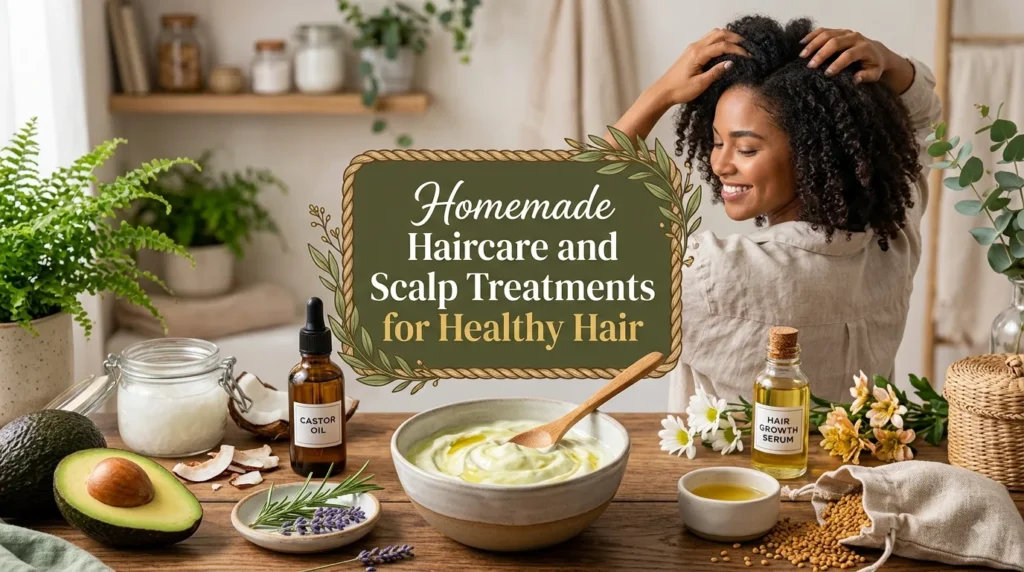
Homemade beauty products are not limited to facial skincare. DIY hair treatments can be useful as simple conditioning rituals.
A small amount of a suitable plant oil can help make dry hair feel smoother. It may also reduce the rough feeling associated with dry ends.
For a basic pre-shampoo treatment, apply a small amount to the lengths and ends, leave it for a short period, and shampoo thoroughly.
For dry hair
Focus on the mid-lengths and ends rather than coating the scalp heavily.
For oily scalp
Avoid assuming that adding more oil will solve oiliness. A gentle shampoo routine may be more appropriate.
For curly or textured hair
The right amount of conditioning depends heavily on hair density, porosity, texture, and styling habits. Start with a small amount.
Scalp safety
The scalp is skin. It can develop irritation and allergic reactions too.
Be especially cautious with essential oils and strongly fragranced DIY mixtures. Essential oils are documented causes of allergic contact dermatitis.
When to avoid DIY scalp treatments
Avoid experimenting when you have unexplained scalp sores, significant scaling, hair loss, persistent itching, or signs of infection.
Those problems deserve professional evaluation rather than increasingly complicated home remedies.
Morning, Evening, and Weekly DIY Beauty Routines
A good homemade beauty routine should support—not compete with—the basics.
Simple morning routine
Morning checklist:
- Gentle cleanse if needed
- Hydrating or moisturizing product
- Sunscreen
- Optional simple DIY treatment on a suitable day
Sunscreen is particularly important because many cosmetic concerns, including uneven-looking pigmentation and premature visible skin aging, are influenced by ultraviolet exposure.
Evening routine
At night, remove makeup and sunscreen, cleanse gently, moisturize, and use any dermatologist-recommended treatment.
A DIY mask does not need to happen every night.
Weekly routine
A beginner might use:
- One gentle DIY mask
- One body exfoliation session if appropriate
- One hair-conditioning treatment
Advanced approach
Track what you use. If your skin suddenly becomes irritated, a simple product diary can help identify what changed.
Frequently overlooked tip
Do not introduce five homemade treatments at once.
If your skin reacts, you will not know which ingredient caused the problem.
Best practice
Keep your everyday routine boring enough that you can identify when something is helping or hurting.
That is often more useful than constantly chasing the newest viral skincare hack.
Homemade Beauty Products for Sensitive and Acne-Prone Skin
Sensitive and acne-prone skin requires more restraint.
If your skin is easily irritated, choose fewer ingredients and avoid fragrance-heavy preparations. Essential oils are especially worth reconsidering because they can cause allergic or irritant reactions.
For acne-prone skin, homemade scrubs are often a poor choice. Physical friction can aggravate already inflamed areas.
A gentle, non-comedogenic commercial moisturizer and sunscreen may be more predictable than a homemade facial cream.
Beginner-friendly approach
For sensitive skin, consider:
- Plain, finely prepared oatmeal
- Simple fragrance-free moisturization
- Fresh, short-contact preparations
- Minimal experimentation
Avoid
- Lemon juice
- Baking soda
- Undiluted essential oils
- Strong vinegar
- Aggressive scrubbing
- Homemade mixtures stored for long periods
What about dark spots?
DIY “brightening” recipes often cause more trouble than they solve. Lemon juice and other acidic kitchen ingredients can irritate skin, and irritation can make uneven pigmentation more noticeable in some people.
Professional recommendation
If acne, eczema, rosacea, persistent redness, or pigmentation is affecting your confidence, consult a dermatologist rather than repeatedly changing DIY treatments.
Homemade skincare can be a self-care tool. It should not become a substitute for diagnosis.
Seasonal Homemade Skincare and Wellness Tips
Your skin can feel different throughout the year, so your routine may need small adjustments.
Winter
Cold, dry air can leave skin feeling tight. Focus on gentle cleansing and richer moisturization.
A simple oil applied over moisturizer may help reduce the uncomfortable feeling of dryness.
Summer
Heat and humidity can increase sweat and oil. Keep DIY products lightweight and avoid leaving homemade mixtures in hot environments.
Heat can also accelerate cosmetic degradation and microbial growth. FDA guidance recommends proper storage and warns that heat can affect cosmetic preservation.
Monsoon or humid weather
Humidity can make heavy oils feel uncomfortable. Keep routines simple and pay attention to hygiene.
Seasonal beginner tip
Do not automatically change every product when the weather changes. Adjust only what your skin actually needs.
Wellness connection
Beauty rituals can also support mental well-being when they create a relaxing pause in the day. However, the goal should be healthy skin and sustainable self-care, not perfection.
When to avoid seasonal DIY experiments
Avoid trying a new recipe immediately before an important event, wedding, vacation, or photoshoot.
Give yourself enough time to see how your skin responds.
DIY Beauty Safety, Patch Testing, and Contamination Prevention
Safety is the most important part of homemade beauty products.
Before using a new ingredient, consider a small-area test. A patch test does not guarantee that a reaction will never occur, but it can provide useful information about tolerance.
For people with a history of contact dermatitis, formal patch testing by a healthcare professional can be more appropriate. DermNet describes patch testing as a method used to identify allergens responsible for allergic contact dermatitis.
Hygiene checklist
- Wash your hands before preparation.
- Use clean utensils.
- Use clean containers.
- Avoid dipping dirty fingers into mixtures.
- Make small batches.
- Label the preparation with the date.
- Store according to the ingredients.
- Discard anything showing unexpected odor, color, texture, or contamination.
- Never share homemade cosmetic preparations.
The water problem
Water-based products deserve special caution because microorganisms can grow when preservation is inadequate.
FDA guidance explains that contamination can come from water, raw materials, manufacturing conditions, packaging, storage, and consumer handling.
Warning signs
Stop using a DIY product if you experience:
- Burning
- Significant redness
- Swelling
- Persistent itching
- Blistering
- Pain
- Worsening inflammation
If symptoms are severe, persistent, or spreading, seek medical advice.
Never assume that “natural” means non-allergenic.
Common Homemade Skincare Mistakes, Myths, and Misconceptions
DIY beauty has plenty of myths.
Natural means safer
Fact: Natural ingredients can still irritate or cause allergy. Essential oils are one documented example.
If it burns, it is working
Fact: Burning can indicate irritation. A cosmetic treatment should not hurt simply to prove that it is active.
Lemon juice is a natural skin brightener
Fact: Kitchen acids are not standardized skincare products. They can irritate the skin, so using lemon juice as a routine facial treatment is not a good beginner practice.
Homemade products never expire
Fact: DIY products can degrade and become contaminated. FDA notes that shelf life depends on the formulation, storage, and use, while water-containing and poorly preserved products can be especially challenging.
More ingredients mean more benefits
Fact: More ingredients create more opportunities for irritation and make troubleshooting harder.
Common mistake: Copying viral recipes
A social media recipe may not explain concentration, pH, preservation, allergies, or skin compatibility.
Best practice
Ask four questions before trying any DIY beauty recipe:
- What is this ingredient supposed to do?
- Is there a realistic cosmetic benefit?
- Could it irritate or sensitize my skin?
- Can I prepare and store it safely?
If you cannot answer those questions, skip the recipe.
How to Choose, Store, and Improve Homemade Beauty Products
Good DIY skincare starts with good ingredient selection.
Choose ingredients from reputable sources and understand whether they are intended for cosmetic use. Avoid questionable raw materials with unclear labeling.
For stored preparations, packaging matters. A clean pump or squeeze container can reduce repeated finger contact compared with an open jar.
FDA explains that dipping fingers into cosmetics can introduce microorganisms and that proper storage helps protect product quality and safety.
Storage tips
Keep homemade products away from excessive heat, moisture, and direct sunlight when appropriate.
Date your preparations. When in doubt, discard them rather than trying to rescue an old mixture.
Homemade versus commercial skincare
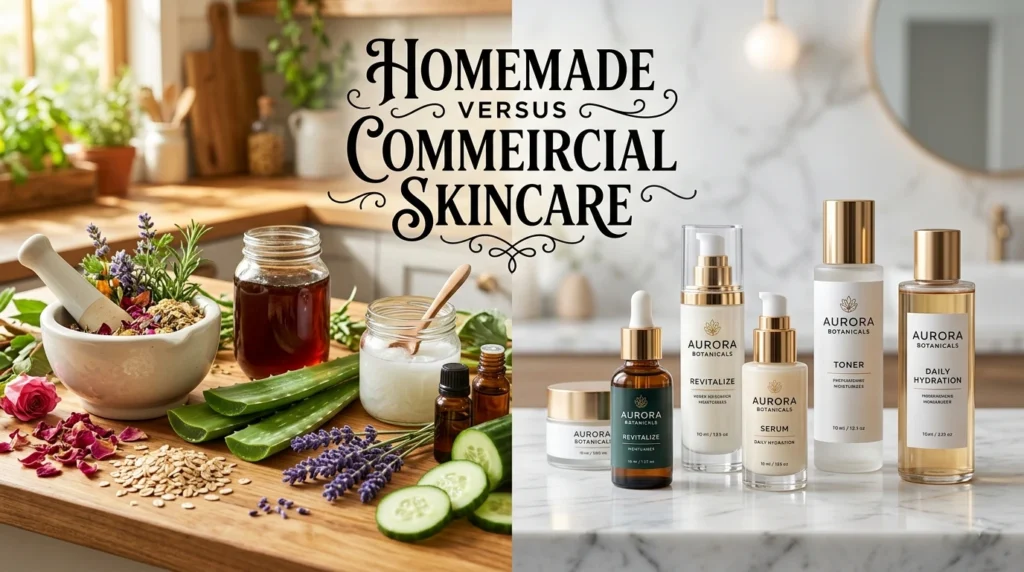
FeatureHomemade beauty productsCommercial skincareIngredient controlHighModerate to highConvenienceLow to moderateHighPreservationOften limitedUsually professionally formulatedCustomizationHighModerateConsistencyCan varyUsually more consistentTestingDepends on the makerOften supported by formulation and safety testingBest useSimple occasional careDaily, targeted, and long-term routines
Commercial does not automatically mean perfect, and homemade does not automatically mean bad. The difference is formulation control and safety testing.
Advanced DIY principle
If you want to formulate sophisticated creams, serums, emulsions, or preserved water-based products, learn cosmetic formulation rather than relying on kitchen recipes.
Professional formulation involves more than combining attractive ingredients. It can involve preservative systems, pH control, stability testing, packaging compatibility, and microbiological safety.
That is why the safest homemade beauty routine is often the simplest one.
Conclusion
Homemade beauty products can turn ordinary skincare into a thoughtful self-care ritual. A fresh oatmeal mask, a simple body treatment, or a small hair-conditioning ritual can feel personal, affordable, and enjoyable.
The key is to keep expectations realistic.
Healthy skin does not require a complicated DIY recipe. It needs gentle care, adequate moisturization, sun protection, sensible ingredient choices, and consistency.
The biggest lesson is also the easiest to remember: natural is not automatically safe, and homemade is not automatically better. Water-based preparations can become contaminated, essential oils can cause allergic reactions, and harsh kitchen ingredients can irritate the skin.
Start small. Use fresh ingredients. Make small batches. Patch test when appropriate. Avoid aggressive hacks. And listen to your skin.
If a persistent skin problem is affecting your comfort or confidence, a dermatologist can help identify the cause and recommend a treatment that is appropriate for your skin.
Beauty is not about chasing flawless skin. It is about caring for the skin you have—and making that care feel sustainable, informed, and genuinely enjoyable.
FAQs
Are homemade beauty products good for your skin?
They can be, when they use gentle ingredients and are prepared and stored safely. Simple, fresh, short-contact treatments are generally easier to manage than complicated homemade formulas.
What is the easiest homemade beauty product for beginners?
A freshly prepared oatmeal-based mask is a simple starting point for many people. Use finely ground plain oats, keep the contact time short, rinse gently, and moisturize afterward.
Are homemade face masks safe every day?
Not necessarily. Most DIY masks do not need daily use. Depending on the ingredients and your skin type, occasional use may be more appropriate.
Can I use lemon juice on my face for glowing skin?
It is better to avoid routine facial use of lemon juice. Kitchen acids are not standardized cosmetic treatments and may irritate the skin.
Are essential oils safe in homemade skincare?
Essential oils can cause irritation and allergic contact dermatitis. Never assume that a natural essential oil is automatically safe for facial use.
How long do homemade beauty products last?
There is no single shelf-life rule. It depends on the ingredients, water content, preservation, packaging, hygiene, and storage. Water-based homemade products can be particularly difficult to preserve safely.
Should homemade skincare be refrigerated?
Refrigeration does not automatically make a homemade cosmetic safe. It may slow some forms of degradation, but it does not replace appropriate preservation or good hygiene.
Is homemade skincare better than store-bought skincare?
Not automatically. Homemade products offer ingredient control and customization, while commercial products can provide more consistent formulation, preservation, packaging, and testing. The better choice depends on the product and your skin’s needs.